Devaluation pushes up total debt by Rs900bn


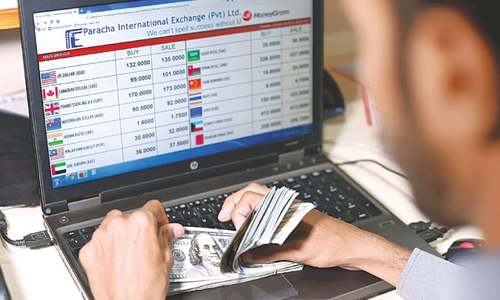
ISLAMABAD: Pakistan’s total debt and liabilities have increased by almost Rs900 billion in a single day and Rs1.4 trillion since Aug 18 because of steep currency devaluation.
Informed sources said the erosion in exchange rate by about Rs9.50 against dollar on Tuesday was a signal that the government was completing prior actions to secure another programme from the International Monetary Fund that required Pakistan to allow a full free float exchange rate and increase policy rate and utility tariffs.
The government has already increased gas prices by a record 35pc last month and is in the process of finalising increase in electricity tariff, proposed by the regulator at Rs3.90 per unit or about 33pc from the existing rate. The cost of production would go up with all these factors over the coming months.
These sources said the government had signalled devaluation after consecutive meetings with the prime minister, including one before the departure of Finance Minister Asad Umar to Bali, to request an IMF support package. There was no reason for the dollar to appreciate so much in a day when there was no hefty repayment due.
Officials said the latest exchange rate would help contract import bill that stood at $55bn last year and help contain the current account deficit.
At the same time, the increased cost of essential imports like oil and liquefied natural gas would impact industrial, commercial and transport costs significantly. The imports of oil and LNG alone are estimated at about $18bn.
On the other hand, the stock market fluctuation also had the political dimension that was not the case with currency rate except that of the cost of indecisiveness of the government to delay a policy decision on IMF programme for so long as the foreign exchange reserves kept on declining to about $8.4bn or six weeks of imports. “There is a visible cost of indecision”, a former secretary finance said.
Officials said the initial pronouncements about foreign exchange coming from Saudi Arabia and China and then the inability of the government to translate such announcements into reality played a part also. The expectations were raised to the extent of $10bn inflows from Saudi Arabia and yet not a single MoU could be signed during the visit of its business delegation.
An official said Pakistan’s total external debt and liabilities stood slightly over $95bn as of June 30. This translated into Rs11.685tr on Aug 18 when the new government came to power and exchange rate was Rs123. The exchange rate jumped close to Rs139 per dollar on Tuesday that translated into a total debt and liabilities of Rs13.11tr, resulting in a total gap of Rs1.42tr.
He explained that exchange rate was around Rs128 on Monday which meant the total burden of external debt and liabilities was about Rs12.2tr which soared by Rs902bn to Rs13.11tr.
Former director general debt Zafar Shaikh said the impact of devaluation was more devastating than the enemy’s missile attack. He said the external debt and liabilities had increased by Rs900bn, and domestic debt cost by Rs220bn, because about Rs11tr out of total Rs17tr domestic debt was of short duration.
He said the combined impact of proposed increase in policy rate and devaluation are set to open a floodgate of inflation and would increase industrial cost of production and the debt servicing cost by 40pc.
The former DG debt in the Musharraf regime said the country’s total foreign exchange reserves had dropped to as low as $1bn in 1999, from where these were improved to $14bn in four years, and expensive debts of $1.3bn were repaid to the ADB without resorting to tactics the present government had resorted to in a much comfortable position.
He said the immediate impact of devaluation would be on imports, importantly increasing the cost of industrial supplies and it would be difficult for the importers to meet their orders made before the devaluation. He said the latest devaluation was a sleeping pill for exporters and a wakeup call for importers and is likely to distort the entire foreign exchange flow.
Shaikh said the government should immediately appreciate currency by 15pc, reduce discount rate and convert all national savings schemes into dollar denomination with some sweetner and announce a scheme under which all banks should collect dollars from the public at a premium and surrender foreign exchange to the central bank.
Published in Dawn, October 10th, 2018