Cabinet's committee postpones increase in electricity tariff till next meeting


The Economic Coordination Committee of the cabinet on Tuesday decided to postpone the decision regarding the expected increase in power tariff till its next meeting, Radio Pakistan reported.
After having raised gas prices, the PTI government has been working on a proposal to increase electricity tariff by an average of Rs2 per unit to partially finance the ever-rising circular debt.
The meeting, chaired by Finance Minister Asad Umer, directed that 100 per cent collection of electricity bills should be ensured and line losses be reduced to the maximum. It also directed the National Electric Power Regulatory Authority (Nepra) and the Power Division to prepare a comprehensive plan for the next five years.
The meeting took up a two-point agenda — electricity tariff and presentation on LNG (liquefied natural gas) terminals — sought by the power division and petroleum division, respectively.
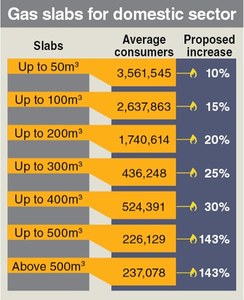
While announcing up to 143pc increase in gas prices last week, Petroleum Minister Ghulam Sarwar Khan had said his ministry was not satisfied with LNG matters finalised by the previous government and “seriously examining” issues relating to LNG terminals.
He said the petroleum ministry, National Accountability Bureau and Federal Investigation Agency were simultaneously and thoroughly working on the subject as one of the two terminals was running on full capacity while the other was operating at below capacity since their inception. He said a report on faults and weaknesses of LNG mechanism would be submitted to the ECC for addressing them.
Moreover, the power division has been seeking an approval for implementation of Nepra determination suggesting a gross increase of Rs3.90 per unit in consumer tariff under relaxed benchmarks for ex-Wapda distribution companies (Discos).
After taking into account the amount of subsidy earmarked in the budget, the net increase in average consumer tariff has been worked out at about Rs2 per unit with a total impact of Rs200 billion.