Thousands of insects stolen from museum
Philadelphians are on the lookout for 7,000 creatures — including a highly venomous spider — that were stolen from the city’s Insectarium and Butterfly Pavilion. It’s estimated that the stolen creepy crawlies are worth up to $50,000.
Thieves made off with up to 80 percent of the museum’s collection, including rare insects, lizards, snakes, zebra tarantulas, desert hairy scorpions and red spot assassin bugs, and a six-eyed sand spider whose bite could rot 25 percent of their victim’s body.
Insectarium CEO John Cambridge said that he wasn’t, “sure there’s ever been a larger live-insect heist. They are not difficult to sell, and there’s a thriving market of insect enthusiasts.”
Authorities believe the thieves previously worked at the museum and were “dismissed for extremely good reasons.” The museum set up a GoFundMe page to raise funds to replace its collection and continue its efforts to “bring insects and other arthropods to the public in a way that they can be loved and appreciated.”

Robot dinosaurs run Japan’s ‘Weird’ hotel
A Japanese hotel is offering guests one of the strangest check-in experiences possible — a reception desk manned by robot dinosaurs.
Whether it’s Japanese, English, Chinese or Korean, the pair of dinosaurs is more than happy to assist customers arriving at the hotel in east Tokyo through the use of a tablet system.
The hotel belongs to the Henn na (whose name means “weird”) chain, which claims to offer the world’s first hotels staffed by robots.
The robots detect guests’ motion on approach and bellow out “Welcome” and gesture with their long arms. However, the icing on the cake is the tiny bellboy hats perched atop their heads.
Yet, despite the novelty of the situation, the hotel’s manager, Yukio Nagai, has said that some customers find the dinosaurs slightly unnerving.

World oldest cheese discovered in Egyptian tomb
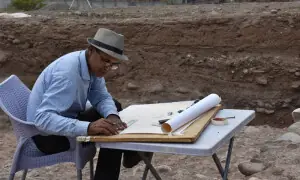
Archaeologists working in an ancient Egyptian tomb have come across possibly one of the oldest cheeses ever discovered. Several years ago, a team working in the tomb of Ptahmes, an Egyptian official who was mayor of the ancient city of Memphis, discovered broken jars with “solidified whitish mass” in one of the jars.
Now a study has identified it as cheese, dating from 3,200 years ago. The peptides detected revealed the cheese had been made with combination cows ‘milk combined with sheep’s or goats’. The container had been covered with a canvas fabric. The characteristics of the cloth indicate it was suitable for keeping a solid rather than a liquid. The absence of other specific chemicals provides further evidence the dairy product was a hard cheese.
The burial site, at the Saqqara necropolis near Cairo, was first unearthed in 1885. But, after being lost to shifting sands, it was rediscovered in 2010.
Published in Dawn, Young World, September 15th, 2018