0
0
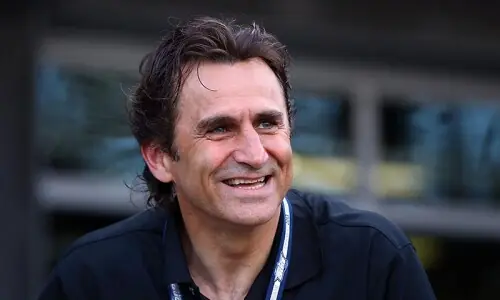
MILAN: Roberto Mancini takes charge of his first competitive game as Italy coach in Friday’s Nations League opener against Poland in Bologna with the tough task of rekindling the nation’s love affair with their national side, decimated after the low of their World Cup fiasco.
The former Inter Milan and Manchester City boss was appointed in May after the four-time winners’ shock failure to qualify for the World Cup for the first time since 1958.
Mancini’s job will be to rebuild a new and vibrant side going into the European Championship in two years’ time and heading towards the 2022 World Cup in Qatar.
The Nations League — in which Italy will also be up against European champions Portugal in Group 3 — will have an impact on seeding for Euro 2020.
And the 53-year-old has insisted that a key to his strategy was to bring in new blood after the departure of several veterans, including iconic goalkeeper Gianluigi Buffon, in the wake of Italy’s World Cup play-off defeat to Sweden last November.
Buffon’s exit has opened the way for 19-year-old AC Milan ‘keeper Gianluigi Donnarumma.
“We’re a great group, very young,” said Donnarumma at the team’s Coverciano training centre near Florence.
“We’re determined to bring Italian football back where it deserves to be. It’s our duty.”
Italy have plummeted to an all-time low of 21st in the FIFA rankings.
They were eliminated in the group stage at the 2010 and 2014 World Cups, although they fared better at the European Championship, reaching the final in 2012 and the quarter-finals in 2016.
But Mancini said he wanted to “try something different” and focus on youth, with four uncapped players including Roma’s Nicolo Zaniolo, who is 19 and has yet to start in a Serie A game.
“When I looked at TV and saw my name among the players called up I was overwhelmed, I didn’t expect it. I called my father and he started crying,” said Zaniolo, whose father Igor played for several Italian clubs including Genoa.
“I will work with humility, commitment and by watching the best and trying to steal some of their secrets.”
Italy’s under-21 side reached the semi-finals of the 2017 UEFA Under-21 Championship, while the under-20s finished third at the FIFA U-20 World Cup in 2017.
Mancini called on the coaches of Serie A squads to give younger players more playing time to build on their potential.
“We’re trying to send a strong message from Coverciano. We’re convinced that those who play well at youth level can do so even at a higher level,” said Mancini.
“At this historic moment there are not many Italian players playing on a consistent basis. Because of this, we have included many young players to increase the number of players so we can get to know them better.”
One of Mancini’s first decisions on being appointed last May was also to recall controversial striker Mario Balotelli for the first time since the 2014 World Cup.
The Nice striker scored in his first game — a 2-1 friendly win over Saudi Arabia — but Mancini’s next two friendlies were a 3-1 defeat to World Cup winners France and 1-1 draw with the Netherlands.
As well as 28-year-old Balotelli, Italy’s strike options also include Lazio forward Ciro Immobile, 28, Fiorentina’s Federico Chiesa, 20, and Juventus’s Federico Bernardeschi, 24.
To anchor the younger players, veteran Juventus defender Giorgio Chiellini, 34, returns to the squad for the first time since Italy’s World Cup play-off defeat.
“Chiellini is back and he’s captain, he’s a point of reference and experience, especially for the youngsters,” said Italy’s Chelsea midfielder Jorginho.
“Italy doesn’t deserve to stay where we are now, we’re all motivated to do well and get back to winning. There’s enthusiasm and we feel good together. I can guarantee you that this national team is not so far from the best.”
Poland too have something to prove after being eliminated in the group stage at the World Cup without star striker Robert Lewandowski scoring once. He and Napoli striker Arkadiusz Milik are expected to play.
After Poland, Italy play Portugal — minus Cristiano Ronaldo — in Lisbon on September 10.
Published in Dawn, September 7th, 2018