20
20


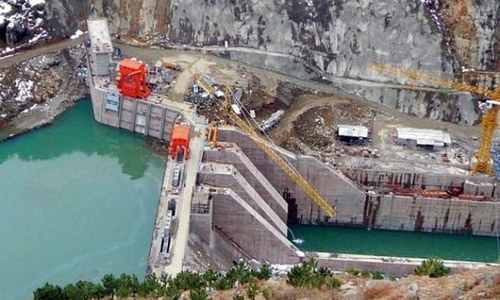
ISLAMABAD: A few hours after the filing of a corruption reference against Adviser to the Prime Minister on Parliamentary Affairs Babar Awan by the National Accountability Bureau (NAB) for his alleged involvement in inordinate delay in construction of the 525MW Nandipur power plant, he resigned from his office on Tuesday.
“Fulfilling Imran Khan’s promise to the nation, I tender my resignation from the office of prime minister’s adviser on parliamentary affairs,” Mr Awan stated in a handwritten resignation in Urdu which he submitted to Prime Minister Imran Khan. “I resign from my office so that I could prove wrong NAB’s allegations levelled against me,” added the Pakistan Tehreek-i-Insaf (PTI) leader.
Mr Awan, who became a member of the prime minister’s cabinet just 16 days ago (Aug 20), said that although he had (only) been accused of causing delay in execution of the power project, even then he did not want to stick to his position.
“Following in the footsteps of Sahaba Karam [companions of Prophet Muhammad (peace be upon him)], I am starting obeying the rule of law from myself,” he said in the resignation.
PTI leader is being investigated for his alleged role in delaying Nandipur power plant when he was law minister
A source in the PTI told Dawn that the ruling party had already decided to remove Mr Awan from the cabinet in view of NAB’s reference against him. However, pre-empting the party’s decision, Mr Awan met Prime Minister Khan and submitted his resignation.
Earlier in the day, NAB filed the corruption reference against Mr Awan for his alleged role in delaying the Nandipur power plant (Gujranwala) being the law minister (from 2008 to 2012).
Besides Mr Awan, former prime minister Raja Pervez Ashraf is also one of the main accused in the reference. He was serving as federal minister for water and power when his role was questioned. Other accused are: Retired Justice Riaz Kiyani, former law secretary; Shamila Mahmood, former research consultant at the Ministry of Law and Justice; Dr Riaz Mahmood, former senior joint secretary of law; and Shahid Rafi, former water and power secretary.
The Supreme Court had appointed a one-man commission of retired Justice Rahmat Hussain Jafferi to investigate the matter. The commission had examined the relevant documents, recorded the statements of witnesses and submitted its report on April 9, 2012.
The commission in its report held officers and officials of the Ministry of Law and Justice responsible for the delay in construction of the power project. The ministry later referred the matter to NAB in the light of the commission’s report.
The Nandipur power project was approved by the Economic Coordination Committee (ECC) of the cabinet on Dec 27, 2007 at a cost $329 million. Its contract was signed on Jan 28, 2008 between the Northern Power Generation Company Limited (NPGCL) and Dong Fang Electric Corporation of China and two consortiums — COFACE for 68.967 million euros and SINOSURE for $150.151m — were established for financing the project.
At the last hearing on Aug 9, a three-judge SC bench headed by Chief Justice Mian Saqib Nisar had expressed its dismay over the delay in filing the reference and ordered NAB to provide a list of inquiries which remained dormant during the period when Qamaruzzamn Chaudhry was chairman of the bureau.
The case was initiated after the Supreme Court restored the 2011 petition filed by former defence minister Khawaja Asif regarding corruption in the Nandipur project. The court had issued notices to the Water and Power Development Authority and the Pakistan Electric Power Company (Pepco).
In its fresh report, NAB stated that a ground check of the project had been conducted by the combined investigation teams of NAB and relevant records taken into possession from the ministries of law, water and power and finance.
During the course of investigation, NAB said, it came to record that the officers and officials of the law ministry had failed to exercise their lawful authorities by not issuing legal opinion, causing losses to the national exchequer, hence they committed the offence of corruption and corrupt practices under Section 9(a)(v) and (xii) of the National Accountability Ordinance (NAO).
In its 94-page report, the commission said the national exchequer had suffered a colossal loss of Rs113 billion due to negligence of the then law minister for causing delay in giving necessary approval and completing documents for the execution of 950MW projects of Nandipur and Chichon-Ki-Malian. There was also negligence on part of executive authorities of the law ministry, which caused the delay in completion of the projects, it added. The law ministry did not clear the issuance of sovereign guarantee of the finance ministry to the contractor, resulting in termination of work.
Babar Awan had told a Supreme Court bench headed by then chief justice Iftikhar Muhammad Chaudhry that he was being persecuted by his political opponents to carry out his media trial.
Published in Dawn, September 5th, 2018