‘Pakistan must make decisions in its own national interests’


 0
0
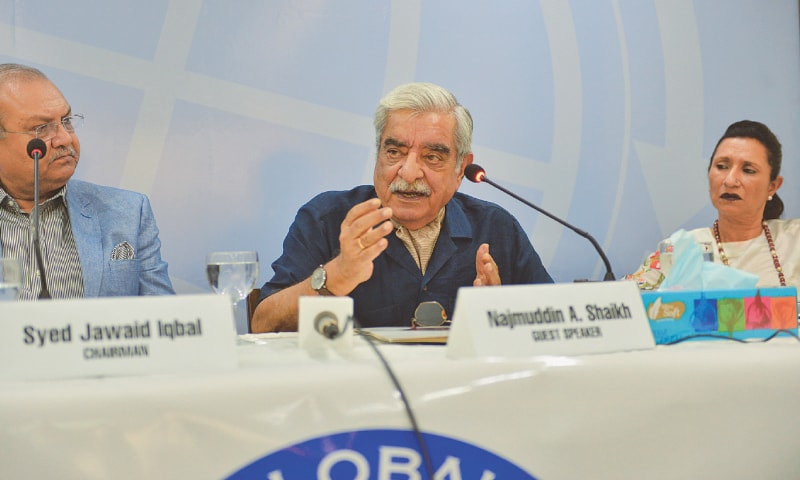

KARACHI: Strength in foreign policy flows from internal policies. The essence of diplomacy lies in indentifying areas of convergence and minimising differences. For our own reasons, we should persuade the Taliban to enter into talks with the Afghan government, but before that the four-nation Quadrilateral Coordination Group should meet and address concerns of the Taliban.
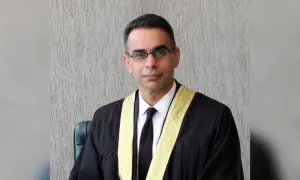
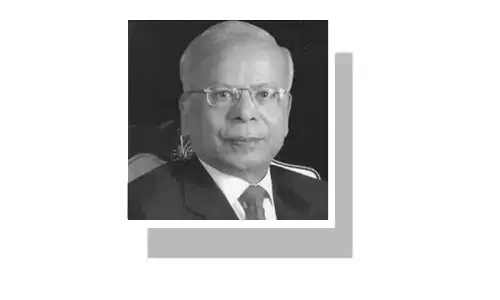
These were some important points highlighted during a talk delivered by former foreign secretary Najmuddin A. Shaikh at an event organised by the Society for Global Moderation.
Speaking on ‘Foreign policy challenges the new government faces’, Mr Shaikh briefly shared how he perceived a foreign policy was formulated and diplomacy should be conducted.
While the former depended on directly what internal policies dictated, the latter should be for mutually beneficial results, he said.
He described relations with the US and Afghanistan as very important and said that today Afghanistan was one of the prisms through which the US looked at Pakistan.
Former foreign secretary Najmuddin A. Shaikh discusses challenges facing new govt on external front
The recurrent theme in Pak-US talks, he said, was terrorism as the US believed that 70 terrorist groups were operating in the AfPak region of which 20 were based in Pakistan.
“They want us [to get] the Taliban [to] hold talks with the Afghan government, to accept the proposal made at the second Kabul conference in April to set up offices in Afghanistan,” he explained.
When the US officials met the Taliban delegation in Doha, the latter had sought certain assurances including that they would be treated as equals of the Afghan government in negotiations.
Quoting the Special Inspector General for Afghanistan Reconstruction, Mr Shaikh said that the Taliban controlled area was 13 per cent in August last year, which had increased slightly this year.
Before suggesting what Pakistan should do in the situation, he said that the China factor especially in the context of China-Pakistan Economic Corridor was crucial in shaping country’s future US relationship.
Referring to the US Secretary of State Mike Pompeo’s warning that the US would closely be watching whether the International Monetary Fund (IMF) bails out Pakistan, he said that the IMF threat was largely aimed at China.
“We have to make decisions in our national interests,” he remarked.
Mr Shaikh also traced the history and looked into factors which led to radicalisation in society. He also touched upon the challenges China faced and Afghanistan’s changing situation.
During the question-answer session, concerns were shared over the country’s deteriorating economic conditions, poor governance and militancy in society.
Replying to a question, Mr Shaikh said that Pakistan should play a mediatory role in Saudi-Iran rivalry.
“The Arab military alliance shouldn’t be anti-Iran or have a sectarian face.”
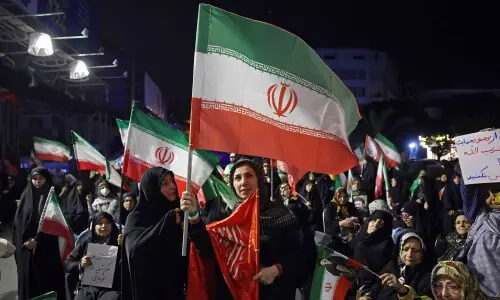
On the recent visit of the Iranian foreign minister, he said that Iran was seeking support of regional countries especially to help tackle its economic crisis. He also suggested that there might be US hand in the current Iranian crisis.
Pakistan must ensure, he added, that there was no interference (in Iran) from our border.
He emphasised the need for improving economic status of the country by increasing its exports.
Published in Dawn, September 2nd, 2018