Pakistani experts to inspect two Indian hydropower project sites



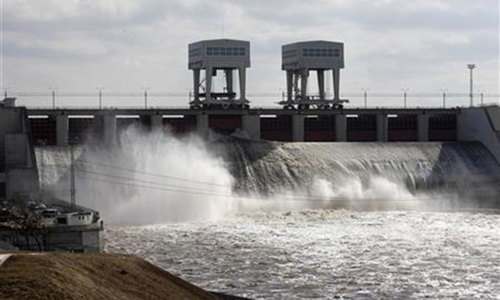
LAHORE: India agreed on Thursday to get sites of its two hydropower projects — 1,000MW Pakal Dul and 48MW Lower Kalnal — inspected by Pakistani experts by the end of next month. It also assured Pakistan of taking up its objections/concerns over the two projects seriously by resolving them amicably in the light of technical memorandums to be prepared and exchanged by the two countries in the next meeting to be held in New Delhi.
“The major breakthrough of the two-day talks held in Lahore is that India has agreed to get the projects’ sites visited by our experts. Therefore, our team comprising experts will visit the sites in India by the end of next month,” Water Resource Secretary Shamail Ahmad Khawaja told Dawn.
“During the visit, our experts will minutely examine the sites, construction in the light of the provisions of Indus Water Treaty (IWT) and the objections raised by Pakistan to the aforementioned projects being executed by India over the Chenab River,” he added.
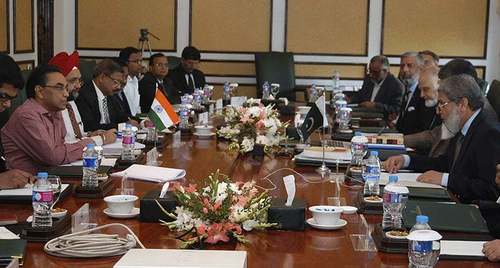
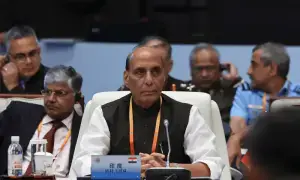
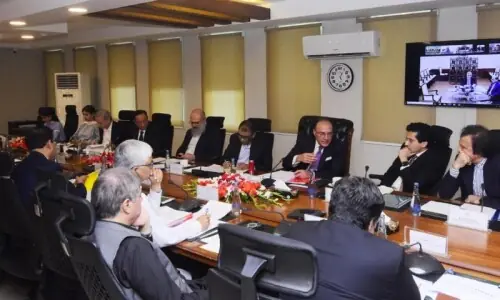
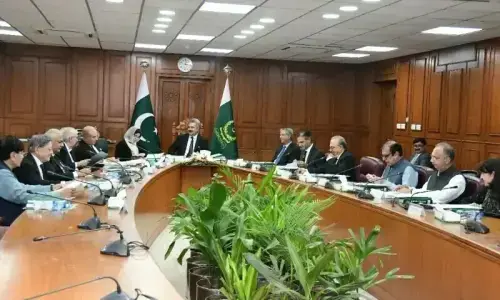
Both delegations headed by Pakistani and Indian commissioners for Indus waters resumed talks on day two, reiterating their stance over construction of the projects. The Indian side led by Pradeep Kumar Saxena reviewed Pakistan’s objections minutely. It also presented its point of view amid justification in response to the objections.
Agreement reached in two-day water talks held in Lahore
The Pakistani side led by Commissioner for Indus Water Syed Mohammad Mehr Ali Shah continued defending its stance, requesting the Indian delegation to address the issues as sought. However, it was mutually decided that both countries would separately prepare technical memorandums based on their point of view and possible solutions.
“We think that we have succeeded in convincing India to address our issues since we don’t want to see any disruption in the flows of our rivers by anyone under the IWT.
“That is why they (Indians) have seriously reviewed our objections once again. And finally during the second round of the two-day talks, which concluded in Lahore on Thursday, it has been decided that both the countries would prepare technical memorandums separately on the issue and exchange the same with each other during the next meeting to be held within next three to four months,” Mr Khawaja, who is supposed to oversee the country’s water-related issues and projects, including the IWT, explained.
He claimed that the next round of the talks — which would be held in India between the two countries — would be the final and conclusive in connection with discussions over Pakistan’s concerns. “Resumption of talks between Pakistan and India — which have been suspended since 2014 — in March and August indicates some positive things. We hope that India would surely respect the IWT by considering our objections through an amicable solution in the next meeting,” he believed.
According to an official privy to the meeting, the two countries stick to their stances on the issue. Both the countries reiterated their stance in the meeting. However, the Indian delegation finally responded to Pakistan’s demand for looking into this issue in the next meeting, he told Dawn.
The official said the Joint Commissioner for Indus Waters also raised objections over heading the Pakistani side by Commissioner Mehr Ali Shah on the very first day before commencement of the talks. “Actually Joint Commissioner Sheraz Jameel Memon was of the view that he should lead the Pakistan side while conducting the meeting with the Indian delegation since Mr Shah was heading the department on additional charge for a period of three months. But when Mr Memon reached there to head the Pakistani team, he came to know that Mr Shah succeeded in getting extension in his additional charge of office. So he returned to office,” the official explained.
He said Pakistan’s demands included reduction of the height of Pakal Dul’s reservoir up to five metres, maintenance of 40-metre height above sea level while making spillways’ gates of the Pakal Dul project, besides clarifying the pattern and mechanism for the water storage and releases and some technical concerns over design of the Lower Kalnal hydropower project.
Earlier, both the Pakistani and Indian sides avoided the media gathered since morning outside the head office of Nespak in Lahore. Though the media tried to convince the staff for access to the talks, the officials didn’t agree. “We inform you all that we would neither brief you nor issue a joint statement regarding the talks,” an official told journalists. At this, the media persons protested over the officials’ attitude, asking the authorities to reveal the outcome of the talks to the nation.
On the other hand, former commissioner for Indus water Syed Jamat Ali Shah expressed reservations over the behavior of Pakistani and Indian sides. “They should have briefed the media since there is no secret. Our nation must know the facts,” he said.
Published in Dawn, August 31st, 2018