Anti-tick spray begins to protect animals from Congo virus


 0
0
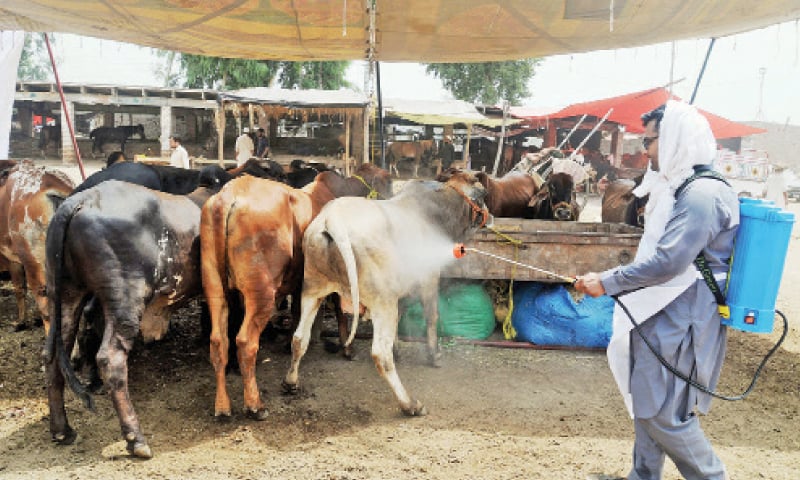

PESHAWAR/GHALANAI: The Peshawar district administration has restricted free movement of sacrificial animals inside the provincial capital so that it could properly spray the cattle at the entry points to ensure their protection from Congo virus.
The administration has directed the officials of livestock department to set up camps at all the entry points to spray the animals against the tick.
According to a statement issued here on Monday, the livestock department would issue certificates to owners of the healthy animals so that they could produce the documents at the time of their sale.
The decision was taken at a meeting chaired by deputy commissioner Dr Imran Hamid Sheikh.
Owners of sacrificial animals were asked to extend cooperation to the concerned staff so that maximum of the cattle could be sprayed on daily basis to protect them from the deadly virus.
It was decided that teams of livestock department would also continue anti-Congo spray in and at main entries of the cattle markets on Ring Road, Chamkani, Sarband and other areas.
In Mohmand tribal district, the livestock department has launched a campaign against Congo virus in the region.
“We started the campaign from July 25 on directives of Fata Secretariat to prevent outbreak of Congo virus in the tribal region,” assistant director livestock Abdul Raziq Safi said on Monday.
He said the department had dispatched teams to all the entry points of the tribal district like Mamad Gat, Ekkaghund, Michnai and all the cattle markets in Ekkaghund Bazaar, Mian Mandi, Lakaro and other areas where they had carried out spray against ticks.
Mr Safi said all the cattle farm owners and other stakeholders were educated through broachers and pamphlets about the deadly virus and precautionary measures against it.
He said due to the effective measures taken by the livestock department no case of Congo virus had been reported in the entire region till date.
He appreciated the cooperation extended by the farm owners against the virus. He said spray campaign would continue till Eidul Azha.
Congo fever is a zoonotic disease which transmits from animals to humans.
Dr Safi said that slaughterhouses were also fumigated during the campaign with butchers being made aware of the Congo virus, and how to spray animals like goats, sheep and cows.
Published in Dawn, August 7th, 2018