60
60

Once Pakistan Tehreek-i-Insaf (PTI) chairman and 2018 election winner Imran Khan forms a government, there will be little time to bask in his triumph: the country's next prime minister will inherit a critical economic situation, and analysts say he must act fast.
The new leadership may be forced to seek a bailout from the International Monetary Fund (IMF) in the coming weeks.
Here are some questions and answers about the predicament faced by the economy:
What is the problem?
Pakistan is on the verge of a balance-of-payments crisis, which threatens the stability of its currency and its ability to repay debts or pay for imports.
Its budget deficit has grown steadily over the past five years, from four per cent to 10pc of GDP.
Read: What awaits the next setup
Imports have skyrocketed, mainly due to rising oil prices. Between July 2017 and March, about 70pc of the country's import bill was for energy, machinery and metals, according to a State Bank of Pakistan report. Meanwhile, exports — mainly textiles — have increased only slightly.
As a result, the foreign currency reserves have declined to about $10.3 billion, according to recent figures given by the caretaker government.
This covers less than two months of imports, analysts say. Meanwhile the rupee has been devalued four times since December, fuelling inflation.
“We borrowed like crazy in the last four to five years, so it's time to repay. But we don't have... reserves,” former finance minister Hafeez Pasha told AFP.
How much do we need?
Pakistan has gone to the IMF repeatedly since the late 1980s. The last time was in 2013, when Islamabad got a $6.6bn loan to tackle a similar crisis.
Also read: IMF bailout on the cards for Pakistan's next government: analysts
Today, the country “needs at least $12 billion”, says Zeeshan Afzal, the director of Insight Securities, a Karachi-based consulting firm.
If approved, it would be the country's largest-ever bailout. But it has not yet completed repayments on its previous loan, which could limit its current leeway with the Fund.
“Islamabad is betting on a maximum of $6.5bn, hoping that this will have a virtuous effect on the confidence of the markets,” a senior diplomat, who asked to remain anonymous, told AFP.
What is the impact on Khan?
Khan promised to create an “Islamic welfare state” on the campaign trail, but the plan — which would require big public spending on health and education — could be stillborn if the economy tanks.
“We will have weeks, not months” to act, Asad Umar, widely tipped to be the next finance minister, told the Financial Times on Thursday.
All options are on the table, he has tweeted, telling media that the new government is considering privatising all state-owned companies, including the debt-laden Pakistan International Airlines.
But there are fears that the terms of any new IMF bailout will be stricter than in 2013, thanks to the tense relationship between Islamabad and Washington, one of the Fund's biggest donors.
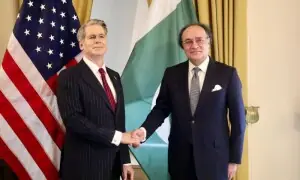
The US has warned that it will be watching closely to ensure Pakistan does not use IMF money to repay debts to China, which has poured billions into the country for infrastructure projects under its Belt and Road Initiative.
Editorial: Mike Pompeo's statement on IMF bailout of Pakistan reeks of US arrogance
Is there any other option?
Local media have reported a recent $2bn loan from China and another $4.5bn from Saudi Arabia, though the transactions have not been confirmed. In any case, Saudi funds would only be used to buy oil.
In the face of a trade imbalance, Khan could try to reduce imports. But such measures have never borne fruit with the country's porous borders and numerous smuggling networks, especially for consumer goods — a major import item.
He could also seek to improve foreign investment. Khan has said his anti-graft campaign and clean government will improve the country's image abroad, hopefully attracting investors who have been spooked by instability and structural issues in recent years.
Examine: Imran Khan’s opportunity with America
The World Bank ranked Pakistan 147th out of 190 countries last year for its business climate.
Khan has vowed change on the home front too, saying his government will dramatically boost tax revenues. That is a major, perennial challenge: only a tiny percentage of those liable actually pay taxes in the country.
A further massive devaluation of the rupee, which would deter imports and make exports cheaper and more competitive, could be considered.
But then “people would be in the streets,” predicts Pasha, the former finance minister.
"It would be the end of Imran Khan."