0
0
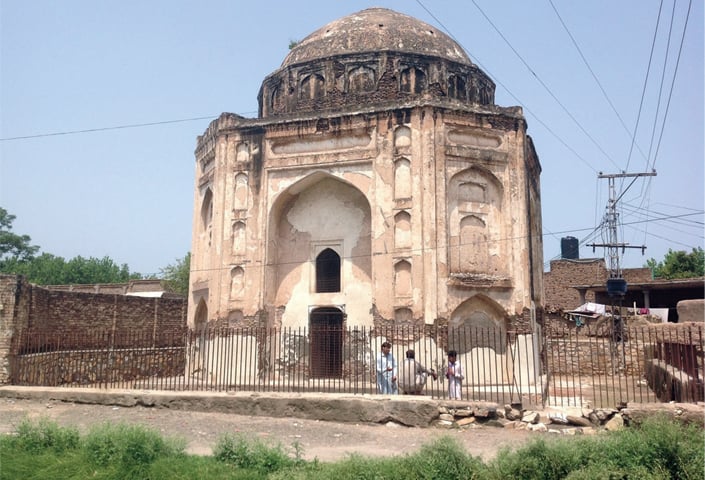
PESHAWAR: A tomb of an unknown saint located on Dalazak Road said to be built in Mughal era is in a shambles and needs authorities’ attention for conservation and proper safeguard against environmental hazards.
Spread over six marlas, the structure is typical of Mughal architecture with beautiful floral patterns all over the inside walls and roof. The heritage site is about 8km from Peshawar city and quite known in the area as visitors come from far and near to pay respects to the ‘unknown’ saint.
Owing to ravages of time, most of its floral patterns have been disfigured and plaster over of its inner and outer walls has gone rustic and crumbled. According to local residents, 20 years ago a grilled boundary wall was erected around the site and since then, the structure was in need of urgent repair. Locals said if not repaired , the old building would continue crumbling down.
Young Waqas Ahmad, watchman at the site said that he was deputed more than a year ago to take care of the tomb. “I perform my duty even on Sundays because the structure is pride of our village. I give whatever information I have to visitors and local people about the old building. I watch and clean the site every day,” he said.
The domed structure has a battered grave of an unknown saint as local residents relate different traditions attached to the historic tomb but are sure of one thing that the impressive dome ought to be have been a tribute to a pious man that lived in the Mughal era. Most people said it was the tomb of Pir Tareek (Bayazid Ansari) so called by his adversaries while others weaved their own versions of myths regarding the domed structure.
Rahmat Gul, 75, a local resident told this scribe that his grandfather had informed him that a saint lived near the Budnai river where a Mughal king would come for hunting and would stay for a short while for receiving prayers of the mendicant. “After death of that pious man, the Mughal king ordered to build a tomb over his grave as a mark of tribute to his spiritual mentor. Though in official papers, the village is known by the name of Dalazak but this particular location is called Gombad Kalay (Dome village) by its dwellers,” he narrated.
Jahangir, a supervisor of KP heritage sites, told Dawn that after 18th constitutional amendment such structures had been delved to the KP archaeology directorate.
He said watchmen had been deputed on such buildings for protection and he paid regular visits to oversee its condition. He said the KP archaeology department had already completed a survey to repair and renovate all such protected heritage sites.
Iftikhar, another resident, said the local people didn’t know much about the real story behind the Mughal-era building but appealed to the authorities concerned to renovate and conserve the tomb and initiate a research work to bring to light as to who might be the person in the grave.
Nawazuddin, spokesperson of KP directorate of archaeology, when contacted told Dawn that Shah Qutab, (Zainul Abedin) had built the said structure during the reign of Mughal king Jalaluddin Akbar as it was obvious from its architectural style. He said Waziri red bricks had been used with four doors and a spiral staircase along its outside wall.
“We have several projects for preservation of heritage sites and their execution depends on the availability of funds. In Peshawar. Three to five such heritage sites dating back to Mughal era existed and conservation work will be launched as soon as adequate funds come our way,” he said.
Published in Dawn, July 30th, 2018