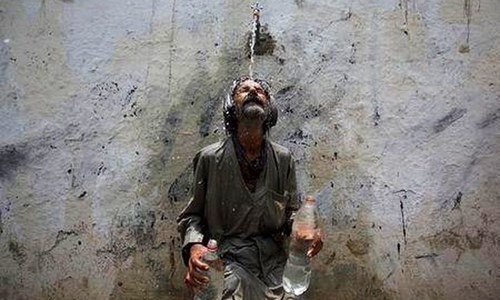
THE impact of global warming came home in a brutal way three years ago when a record-breaking heatwave in lower Sindh resulted in around 2,000 fatalities, mainly in Karachi, over the course of a few days.
The rising temperatures across much of the country this week, which rendered major cities into ‘urban heat islands’, are reminiscent of those deadly days in June 2015.
As reports of fatalities in Karachi emerged on Monday, meteorological experts warn of impending heatwaves liable to occur more frequently and for longer durations.
However, there is evidence of increased official preparedness to tackle the weather crisis, particularly in Karachi.
Unlike in the past, early weather warnings were circulated by the Met department and short-term disaster management plans swung into action involving city administrations, hospitals and philanthropic organisations.
Contingency planning is particularly critical especially when climate scientists warn that severe weather conditions will become annual occurrences.
This must include public messaging campaigns explaining measures to combat heat emergencies, with life-saving information for those most at risk.
However, more viable long-term solutions for cities will help prevent an unendurable increase in temperature and reduce deaths.
Because global warming is a potential instigator of lethal heatwaves that pummel vulnerable populations, focusing on urban design and construction material is crucial.
Instead of felling trees and erecting monstrous high-rises that elevate city temperatures, more public parks and green belts must be encouraged.
Public-private partnerships have previously proven successful with open spaces turned into parks.
One way to combat the vagaries of the weather is to plant more shady trees — a mitigating measure at work in KP.
Additionally, a well-laid out public transport system for major cities will also reduce carbon emissions, another factor strongly correlated with rising temperatures.
For Pakistan, at ever increasing risk of extreme weather, combating climate change requires action on a war footing.
With the latest heatwave in the country setting off alarm bells that a recurrent pattern is setting in, the message could not get any clearer.
Published in Dawn, May 23rd, 2018