Slain Afghan journalists remembered on World Press Freedom Day

Afghanistan's slain journalists were remembered on World Press Freedom Day on Thursday, days after the deadliest attack on the country's media since the fall of the Taliban in 2001.
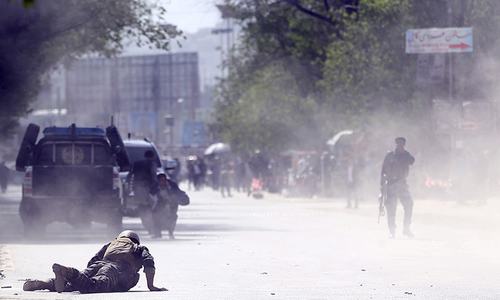
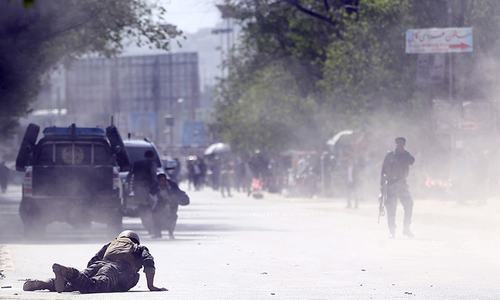
Ten journalists, including Agence France-Presse (AFP) chief photographer Shah Marai, were killed in assaults on Monday, underscoring the dangers faced by the media as the war-torn country slips deeper into violence.
"Afghanistan's journalists are among the bravest in the world," said Omar Waraich, Amnesty International's deputy director for South Asia.
"Working in some of the most difficult conditions, they have faced threats, intimidation and violence for simply doing their jobs."
A double suicide blast in Kabul on Monday, claimed by the Islamic State group, left 25 people dead including Marai and eight other journalists, while a BBC reporter was killed in a separate attack in eastern Khost province.
Media workers from Tolo News, 1TV, Radio Free Europe and Mashal TV were also among the dead in Kabul.
The deadly assaults have shaken Afghanistan's tight-knit journalist community. Many of them are close friends as well as colleagues who look out for one another as they work in an increasingly hostile environment.
But many remain defiant, determined to continue their work despite the risks.
Hours after the Kabul explosion, dozens of Afghan news editors and executives returned to the site in a public display of defiance to militants.
"World Press Freedom Day reminds me and my colleagues of the importance of reporting — reporting for a vibrant democracy and serving people with the information they need and they want," Parwiz Kawa, editor-in-chief of the Hasht-e-Subh Daily newspaper, told AFP.
"This day is to renew our commitments and to remember our sacrifices."
1TV editor-in-chief Abdullah Khenjani said Thursday was a "mourning day" for the broadcaster, which lost a reporter and cameraman in Monday's blast.
"This day reminds us how tough the past year was," Khenjani told AFP, adding his colleagues were heartbroken, "especially when we see the empty chairs... in our newsroom".
"We will hold a prayer ceremony... and ask God to be with us in such a tragic moment."
The private news channel was badly damaged when a truck bomb detonated in Kabul last May, killing around 150 people, but was back on the air within a few hours.
'End journalists' slaughter'

Afghanistan was last year ranked the third most dangerous country in the world for journalists by Reporters Without Borders (RSF).
The media watchdog said since 2016, it has recorded the killings of 34 journalists in Afghanistan.
Afghan media outlets have condemned the government's failure to protect them, particularly at the scene of suicide attacks where secondary blasts are a constant concern.
On the same day as the Afghan journalists were killed, Philippine radio broadcaster Edmund Sestoso was shot by assailants in the southern city of Dumaguete, said Human Rights Watch. Sestoso died on Tuesday.
"That Sestoso's murder occurred on the same day 10 journalists were killed in Afghanistan made it particularly tragic," said Carlos Conde, researcher in the Asia division of Human Rights Watch.
"That he died on the eve of World Press Freedom Day serves as a reminder that much needs to be done for press freedom around the world and end the slaughter of journalists."
RSF figures show 50 professional journalists were killed worldwide in 2017, the lowest toll in 14 years.