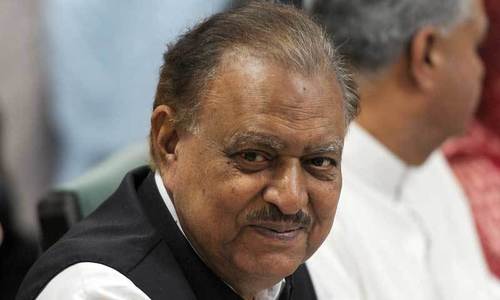
PPP Senator Raza Rabbani on Monday objected to President Mamnoon Hussain's promulgation of four ordinances bringing into force the incumbent government's Economic Reforms Package (ERP), arguing that the president's bypassing of parliament on the matter renders the ordinances "illegal".
Rabbani, a former Senate chairman, was speaking at the first session of the Upper House chaired by his successor, Sadiq Sanjrani.
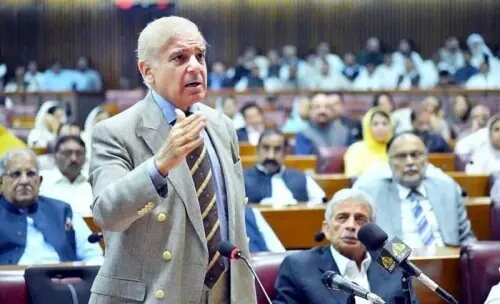
During the debate, Rabbani complained that, "The president of Pakistan promulgated these four ordinances without taking the parliament into confidence. He stepped on mine as well as the entire house's toes. It seems as if there is an ordinance factory around the parliament building."
"According to the Supreme Court's decision, an ordinance can not be passed in this manner. They can only be passed after being presented to the cabinet. The Economic Advisory Council has no standing in the eyes of the law, and hence these ordinances are illegal," he argued. Rabbani demanded that the matter be referred to the Privileges and House Committee.
PPP Senator Sherry Rehman similarly accused the federal government of "imposing" the ordinance on parliament.
Jamaat-i-Islami Senator Sirajul Haq questioned the intentions behind introducing the controversial amnesty scheme, saying: "The government has brought the amnesty scheme only to convert black money into white. The scheme's actual purpose is not to extend the tax net but to provide relief to the corrupt."
The JI emir stated that passing the ordinances right after calling parliamentary sessions on the matter was "sad", adding: "it shows that the government did not want the schemes debated in parliament."
The opposition later walked out in protest after recording its objections.
Finance Minister Rana Afzal disagreed with Rabbani and the opposition's evaluation, claiming that "no laws were violated in the promulgation of the ordinances."
The minister also clarified that the cabinet was consulted on the matter. "It's incorrect to think that the cabinet's approval was not taken. The cabinet's approval was obtained through circulation," he stated.
'One-time amnesty'
President Hussain had on Sunday promulgated four ordinances to implement the ERP, which envisage a “one-time” amnesty scheme to whiten undeclared assets at home and abroad, reduction in income tax rates, issuance of dollar-denominated bonds and prohibition of cash transactions in non-filer accounts.
The ordinances promulgated were: Voluntary Declaration of Domestic Assets Ordinance 2018, Foreign Assets (Declaration and Repatriation) Ordinance 2018, Income Tax (Amendment) Ordinance 2018, and Economic Reforms (amendment) Ordinance 2018.