Nepal gets Communist PM after landmark polls


 0
0
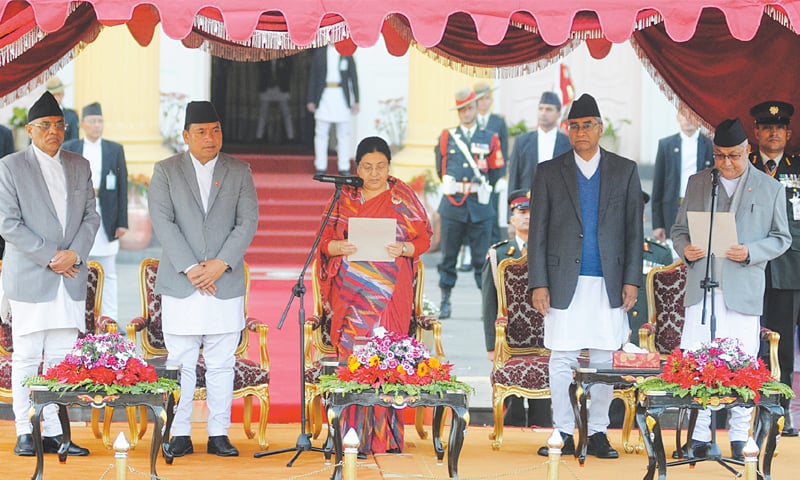

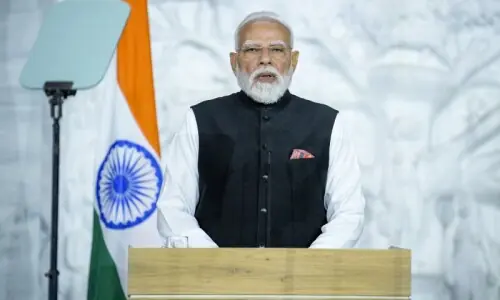
KATHMANDU: The leader of Nepal’s largest Communist party was sworn in as prime minister on Thursday, two months after leading his party to a thumping victory in landmark elections billed as a turning point for the impoverished Himalayan nation.
K. P. Sharma Oli will head the first government elected under a new national constitution that cements Nepal’s transformation from Hindu monarchy to a federal republic 11 years after the end of a brutal Maoist insurgency.
An alliance of Oli’s main Communist party and the former Maoist rebels trounced the incumbent Nepali Congress party in last year’s polls, winning a strong majority in both houses of parliament and six of the seven provincial assemblies.
The Communist leader was sworn in as prime minister by President Bidya Bhandari on Thursday afternoon.
Nepal’s post-war charter sets out a sweeping overhaul of the political system, devolving significant power from the centre to the seven provinces.
But the handover of power after last year’s polls was delayed by disagreements over how the new election rules in the constitution should be implemented.
The long delay has dampened the optimism that accompanied the polls, when many voters cast their ballots hoping a new government would bring much-needed stability and development.
Nepal has cycled through 11 prime ministers since the civil war ended in 2006, allowing corruption to flourish and growth stagnate.
Sher Bahadur Deuba, who resigned as prime minister earlier on Thursday, spent just eight months in office.
Rules under the new constitution make it harder to oust the premier, raising hopes that the next government could last a full five year term.
During Oli’s last term in office in 2015, relations between Kathmandu and its traditional ally Delhi soured after protests over the constitution led to a blockade of the Nepal-India border.
The blockade caused a crippling shortage of goods in the landlocked Himalayan nation as it was still reeling from a devastating earthquake that hit earlier that year killing nearly 9,000 people.
Published in Dawn, February 16th, 2018