0
0

LAHORE: The Zoo authorities claim to have planned some measures to minimise mortality after the death of many animals in the last seven to eight months.
The recent incident took place on Tuesday last when four-month-old leopard cub died. Another cub from the same parents had died last year at the age of three months.
In May this year, elephant Suzi died at the Lahore Zoo due to uric acid problem. She remained a source of entertainment for the visitors and revenue for the Zoo.
A lioness died two months ago after long suffering from paralysis. The Zoo administration claims that it was about to take a decision to cull the animal to provide her relief from a painful life but she died a natural death.
The same month a black buck (female) and a hog deer died of stomach issues. In November, a mouflon sheep died following a fracture in her leg.
A camel died in the Zoo and its management claimed that it was an accidental death as a blue bull ran into it in the process of shifting of the bull and tore apart the jugular vein of the camel. The incident took place before Eidul Azha.
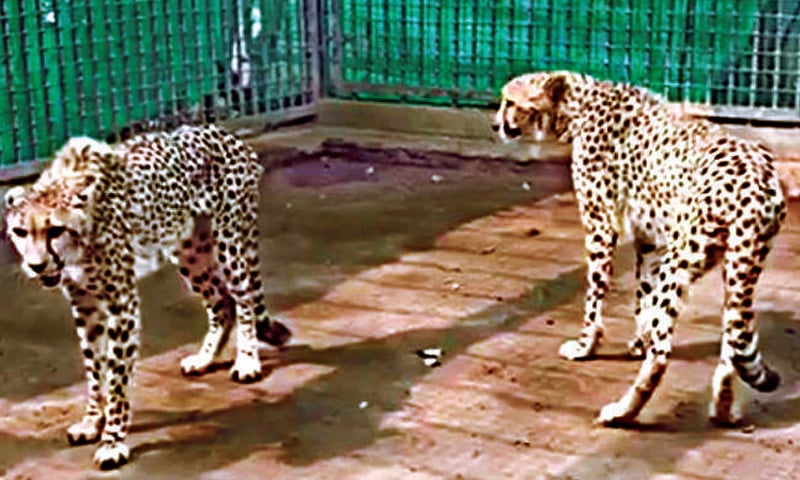
The most noticeable deaths were of two Cheetahs brought to the Lahore Zoo from South Africa in October 2017 by a company Barlex. The male Cheetah died within one week and the female after a month.
The Zoo management told Dawn that since both Cheetahs died during the “quarantine period”, they did not pay their price to the supplier which was Rs7.9 million. The male Cheetah died of virus that develops in animals during transportation and it also developed some stomach issues.
Lahore Zoo Director Hassan Ali Sukhera told Dawn it’s true that many animals had died in the last few months but the situation was not all that alarming. “Every zoo of the world on an average has 30 to 40pc mortality rate. It doesn’t mean we are not looking after animals,” he said.
Asked about loss of millions of rupees with the deaths of animals, he insisted it was a natural process and even advanced countries could not prevent mortality of animals despite having more facilities.
He, however, said the Lahore Zoo was working hard to improve the healthcare of animals and birds. He said keeping in view the strength of more than 200 animals, a senior vet officer post would be created.
Dr Rizwan and Dr Warda, veterinarians at the Zoo, told this reporter that inbreeding led to deaths of big cats.
“An ICU unit, a laboratory and a vet hospital would be built at the Zoo to improve the healthcare and minimise deaths of animals,” said Dr Rizwan.
Dr Warda said there was a need to bring new animals to the Zoo to avoid inbreeding issues.
Published in Dawn, December 8th, 2017