PTI retains NA seat in Peshawar by-election with 45,734 votes

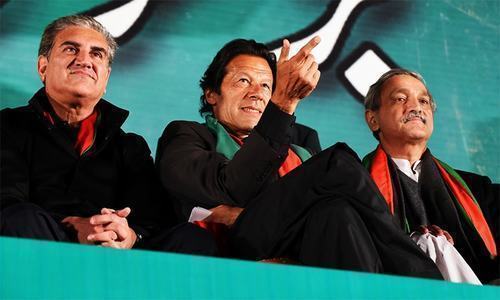
The ruling Pakistan Tehreek-i-Insaf (PTI) retained its National Assembly seat, NA-4, Peshawar IV, in Thursday’s by-election as its candidate, Arbab Amir Ayub, defeated rivals by a big margin.
Unofficial election results from all 269 polling stations compiled by the Election Commission of Pakistan (ECP) through the new Result Transmission System (RTS) showed that Arbab Amir bagged 45,734 votes, Awami National Party’s Khushdil Khan 24,874 votes and Pakistan Muslim League-Nawaz’s Nasir Khan Musazai 24,790.
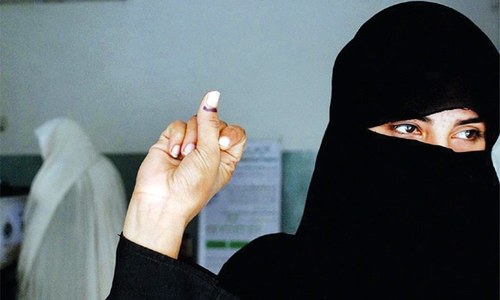
A total of 133,960 votes were cast during the by-poll, but after rejection of 2,622 votes, the number of valid votes stood at 131,298. The voter turnout remained low at 33.67 per cent.
The seat had fallen vacant in August after the death of dissident PTI MNA Gulzar Khan, who had won it in the 2013 general elections by receiving 55,134 votes, Dawn reported.
The PML-N candidate was supported by the Jamiat Ulema-i-Islam-Fazl, whose candidate had obtained 12,519 votes in the 2013 elections.
Polling remains peaceful amid tight security
The performance of Pakistan People’s Party candidate Asad Gulzar and Jamaat-i-Islami’s Wasil Farooq Jan was dismal as the former secured fourth position and the latter sixth in terms of votes obtained.

Tehreek-i-Labaik Pakistan candidate Allama Dr Mohammad Shafique Ameeni, a new entrant to the electoral arena, fared better than JI’s candidate.
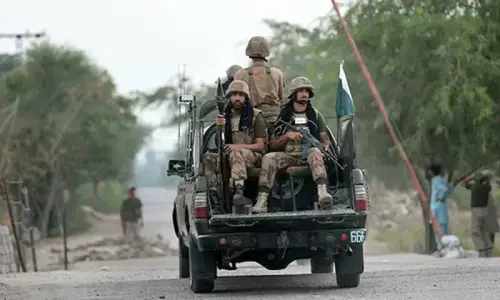
Overall, the polling was held in a peaceful environment as around 15 personnel of the Pakistan Army and police were deployed on every polling station. The police and army men were also deployed on rooftops and surroundings of polling stations.
Despite the massive door-to-door campaign by political parties, most polling stations didn’t see long queues of voters.
The polling process remained smooth and peaceful by and large, as the security forces didn’t allow irrelevant people to enter the premises of polling stations.
The voters were barred from carrying cellphones into polling stations. Many of them showed reluctance in handing cellphones over to other voters.
For the first time in the country’s history, the ECP introduced the Result Transmission System for the quick dissemination of election results from polling stations by the presiding officer to the district returning officer.
Though the district administration had announced a public holiday in the constituency for the day, many daily wagers didn’t exercise their right of franchise for being busy with their routine work.
According to the polling staff members, the turnout was badly affected by the non-participation of labourers.
They said only five to 10pc of voters in the constituency were government employees.
In some areas, the people’s votes were registered in polling stations away from their houses despite the presence of polling stations close to their localities.
Pilot test of EVMs
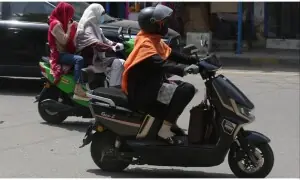
All political parties had arranged vehicles to take voters to polling stations from their houses and drop them off back violating the code of conduct made by the ECP. Vehicles were seen hoisting the flags and posters of parties while carrying voters to polling stations.
For the first time in the country’s history, the ECP conducted the pilot testing of the electronic voting machines (EVM) in 100 polling booths, where demonstration of electronic voting was exercised. Each vote cast through the EVM took 20 seconds.
A presiding officer at the Hazarkhwani polling station said the use of EVMs in the next general elections would save the government’s money and the voters’ time.
“The government spends billions of rupees on the payment of honoraria to the polling staff in each election in the country, which will be saved after the introduction of EVMs,” he said.
The presiding officer said there would be no manual counting at the end of the polling time and instead, the electronic election results would be declared within seconds.
Code of conduct violations
A total of 397,904 voters exercise their right of franchise in the by-polls. Among them were 235,164 men and 162,740 women.
The ECP had established 269 polling stations having 837 polling booths for the polling.
Meanwhile, the Coalition for Elections and Democracy observers, in its preliminary report, said the campaign material and campaign activity was seen outside majority of the NA-4 polling stations implying that the ECP’s code of conduct was not followed.
It sad at 25pc sampled polling stations, voters were seen to be transported and ‘voter parchi’ was also distributed.
The observers also said the presence of campaign material and party camps within the restricted 400 yards of the polling stations was noticed at 62pc polling stations.
They said it recorded a total of 119 violations of the election code of conduct and that wall chalking and a large size of banners and posters were the most common.
The observers said the wall chalking was observed in favour of independent candidate supported by the Milli Muslim League, PTI and PPP in the areas of Hassan Khattak, Shageeabad, Yousafabad, Telaband, Sheikhan, Mushtazai, Shaikh Mohammadi, Sulemankhel, Mashogagar, Badabhera, Maryamzai and Sherkera.
With additional reporting by Muhammad Bilal in Islamabad.