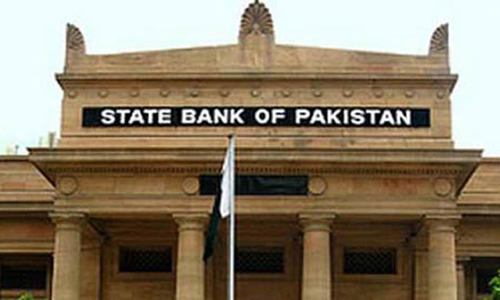
KARACHI: Foreign direct investment (FDI) increased 56 per cent year-on-year in the first quarter of 2017-18, the State Bank of Pakistan (SBP) reported on Wednesday.
This is in contrast to the overall trend as inflows remained largely poor during the last four years.
FDI in July-September rose to $662 million from $423m a year ago, an increase of $238.5m.
The government is under pressure because of rising current account and trade deficits. The twin deficits are making it difficult for the country to meet foreign obligations.
The other two important sources of foreign exchange — remittances and exports — have also shown positive signs with the beginning of 2017-18.
Data shows Chinese investment was $430m, or about 65pc of total FDI received during the first quarter.
FDI from China was 216pc higher year-on-year in July-September. Pakistan received just $136m in the same quarter a year ago.
Chinese investment constitutes 65pc of total inflows of $662m
FDI in September was $204.8m. The inflow from China amounted to $178.7m and was the highest in September. Inflows from only two countries were in double digits last month. FDI from Kuwait and the Netherlands amounted to $15m and $14.5m, respectively.
Pakistan relies heavily on Chinese investment for its FDI. Investments from all other countries amounted to just $232m during the three-month period.
The second-highest FDI came from Malaysia, which invested $111m during the quarter. Inflows from all other countries were less than $30m.
Inflows from the United Arab Emirates, United States and Hungry were about $22m each while FDI from France remained $28.5m.
Overall foreign private investment, which includes foreign portfolio investment, showed a growth of 29.5pc to $583.7m during the quarter. The country witnessed a net outflow of $78.2m in portfolio investment during the quarter, which reduced the impact of higher FDI. During the same quarter of last fiscal year, portfolio investment witnessed an inflow of $27.5m.
The government is struggling to maintain foreign exchange reserves at a level that provides the import cover for three months. Imports have been increasing while exports showed slight improvement in July-September. The imbalance led to a current account deficit of $2.6 billion in the first two months of 2017-18.
Pakistan’s external financing needs stand at $18bn for the current fiscal year. Finance Minister Ishaq Dar recently said the country can comfortably fulfil external financing needs, but many independent economists question the claim.
The government is also planning to borrow up to $1bn through sukuk. The government borrowed heavily from commercial banks in 2016-17. This indicates that the trend will not change in the current fiscal year because of a growing need for dollars to meet foreign obligations.
Published in Dawn, October 19th, 2017