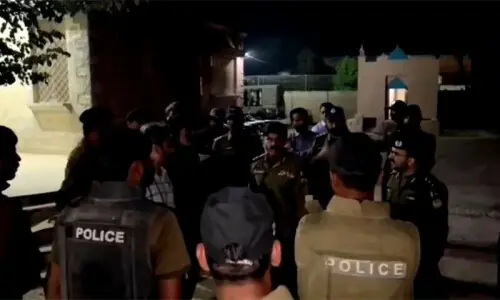
IF Pakistan is a dangerous country for journalists, then those who report from Fata are among the most at risk due to militancy and security-related sensitivities in the area. This was yet again demonstrated by recent events in KP. On Sunday, Shahnawaz Tarkzai, a senior correspondent working in the tribal areas for Mashaal Radio, was abducted by unidentified armed men from a press club in Charsadda district. In a similar incident, Islam Gul Afridi who is based in Khyber and writes for Akhbar-i-Khyber’s weekly magazine, was picked up while en route to Peshawar from Islamabad. Both were later set free unharmed, if shaken by the experience, and have yet to disclose anything about their ordeal. Besides these two, a freelancer and journalism student, Junaid Ibrahim, was taken away from his house in Swat. He has yet to be recovered.
In a security state with little accountability and a militancy problem, providing information to the public is in itself deemed a suspicious activity that must be controlled and manipulated. Journalists are thus routinely intimidated by various quarters: some, for the sake of self-preservation, either sanitise their stories, restrict themselves to ‘non-controversial’ subjects or even leave the profession. In the absence of any definitive evidence — which most likely will never surface — it is perhaps premature to point fingers, but the modus operandi in the recent incidents is not unfamiliar. At least both journalists have been freed; many others have not been so lucky. After Hayatullah Khan was abducted in Fata in late 2005 — following his report about a drone strike that killed a militant leader in North Waziristan — and found dead six months later, a judicial inquiry was ordered. The report, however, was never made public, although he was the fifth journalist to be killed in Waziristan within a span of two years. It is this impunity and the government’s utter lack of interest in bringing journalists’ murderers to book that keeps alive the threat to the critical agents of public information in Pakistan.
Published in Dawn, October 18th, 2017