The big picture analysis that was presented is shared by most independent analysts and economists.
Macroeconomic stabilisation has given way to serious macro concerns about the health of the economy — what army chief Gen Qamar Bajwa is reported to have said in Karachi on Wednesday is not in much dispute.
Indeed, Gen Bajwa attempted an even-handed assessment by appreciating the strides the PML-N government has taken towards improving the country’s infrastructure and electricity problems. And while the comment regarding sky-high debts may be simplistic, the government is struggling to explain the sustainability of the debt burden it has accumulated.
The state of the economy is very much a case of mixed signals with a triple threat — circular debt, the external position and the fiscal deficit — potentially reversing all the gains of the stabilisation achieved in the early years of this government. Indeed, rational analysts would suggest that unless urgent remedial steps are taken, the familiar embrace of the IMF may become inevitable.
To a general analysis of the state of the economy can be added a very specific problem: Finance Minister Ishaq Dar. The minister’s accountability problems are an undeniable distraction compounded by the fact that they are tied to the political and legal fate of the Sharif family.
Considering Mr Dar’s closeness to Nawaz Sharif and his role as political fire-fighter for the party boss, there is simply no way that he can be giving the affairs of the finance ministry anything more than a fraction of the attention they deserve. There is also a problem of Mr Dar being unable or unwilling to recognise that his prescription for economic growth and stability is no longer working.
There is near-universal agreement that the exchange rate must be allowed to adjust downwards, circular debt addressed, the fiscal deficit reined in and a realistic plan for shoring up reserves drawn up. But Mr Dar appears unable to see beyond matters of personal prestige.
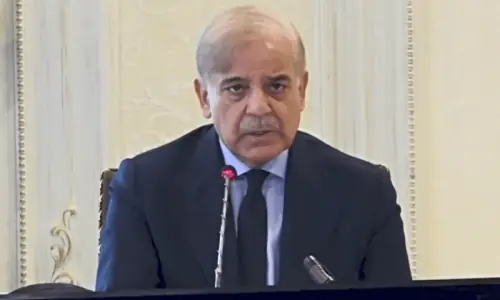
For all the challenges presented by the management of the economy, however, there is a problem with the forum in which the military leadership has chosen to take up the matter. Such concerns are best communicated directly to the government, and under Prime Minister Shahid Khaqan Abbasi there have been regular meetings of the civil-military leadership to raise such matters. Indeed, given Mr Abbasi’s expertise, the economy can be discussed in more detail if necessary than under his predecessor. Were any such attempts made?
The problem with public comments is that they have the potential to be misinterpreted, raising questions about whether institutions are willing to work within their own domains. As Gen Bajwa rightly noted, true national security must be understood in an economic context too. But heed must also be paid to democratic stability.
Published in Dawn, October 13th, 2017