Trailblazing trio win chemistry Nobel for ‘freeze framing’ life


 0
0
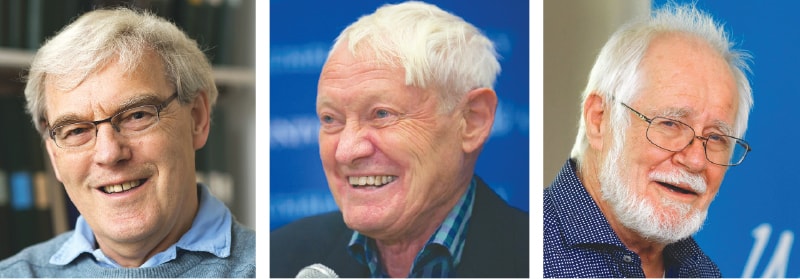

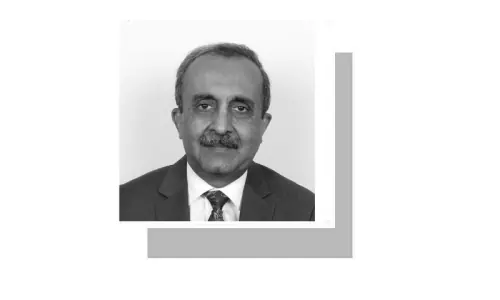
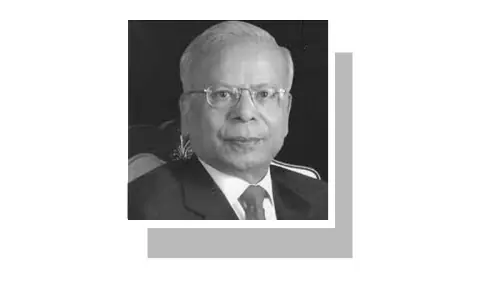
STOCKHOLM: A trio of Swiss, American and British scientists won the Nobel chemistry prize on Wednesday for developing cryo-electron microscopy, allowing researchers to see biological molecules frozen in action.
The work by Jacques Dubochet, Joachim Frank and Richard Henderson makes it possible to image proteins and other molecules after freezing them rapidly to preserve their shape, providing a powerful new tool for medical research.
“It’s like frames in a movie. Each of these pictures represents a frame and they can be put together into a movie and we can see what the molecules do,” said Peter Brzezinski, a member of the Nobel committee for chemistry.
The new approach fills a previously blank space by generating images of everything from the surface of the Zika virus to proteins that cause antibiotic resistance or are involved in Alzheimer’s.
The Royal Swedish Academy of Sciences, which awarded the nine million Swedish crown ($1.1 million) prize, said the technology had moved biochemistry into a new era.
By freezing biomolecules mid-movement, scientists can unravel previously unseen processes - a major advance both for basic understanding and the potential development of new drugs.
Scottish-born scientist Henderson used an electron microscope to generate a three-dimensional image of a protein at an atomic resolution, showing the potential of the technology.
Until then, electron microscopes were only seen as suitable for imaging dead matter, because the powerful electron beam destroyed the biological material.
His breakthrough was further developed by German-born scientist Frank, a US citizen, while Dubochet of Switzerland used rapidly frozen water to preserve the natural shape of the biomolecules.
Frank said cryo-electron microscopy had “immense” potential for medical research, which is increasingly focused on processes inside cells, but it would take time for this to play out - and he was taken aback by news of the award. “I was overwhelmed. I thought the chances of winning a Nobel prize were miniscule,” he told a news briefing by telephone.
MAPPING DISEASE: Henderson was equally taken aback and said he had rejected the first phone call from the Swedish Academy on Wednesday before picking up second time.
“The three of us who have been awarded the prize are sort of acting on behalf of the whole field,” he told a news conference in Cambridge, England.
Understanding the structure of proteins and working out how they interact in the body should spark fresh approaches to drug development, just as earlier advances had produced today’s multibillion-dollar biotech drugs, he added.
“In a few years, maybe five years, we might know most of the structures ... it’s quite an exciting time,” Henderson said.
Published in Dawn, October 5th, 2017