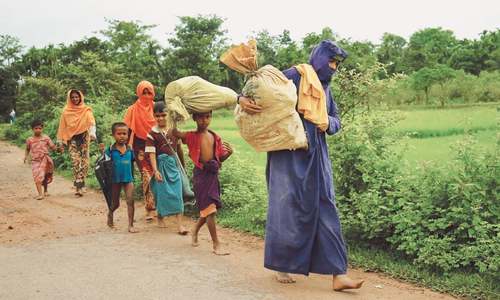
Camps reach capacity as Rohingya Muslims pour into Bangladesh


Aid officials said relief camps were reaching full capacity as thousands of Rohingya refugees continued to pour into Bangladesh on Sunday fleeing violence in western Myanmar.
Some 73,000 people have crossed the border since violence erupted on August 25 in Myanmar's Rakhine state, said UN High Commissioner for Refugees spokeswoman Vivian Tan.
The violence and the exodus began after Rohingya insurgents attacked Myanmar police and paramilitary posts in what they said was an effort to protect their ethnic minority from persecution by security forces in the majority Buddhist country. In response, the military unleashed what it called “clearance operations” to root out the insurgents.
Another aid official said on Saturday that more than 50 refugees had arrived with bullet injuries and were moved to hospitals in Cox's Bazar, on the border with Myanmar.

Refugees reaching the Bangladeshi fishing village of Shah Porir Dwip described bombs exploding near their homes and Rohingya being burned alive.
Both Myanmar's security officials and Rohingya insurgents are accusing each other of atrocities. The military has said nearly 400 people, most of them insurgents, have died in clashes.
Aid workers said that large numbers of refugees required immediate medical attention as they were suffering from respiratory diseases, infection and malnutrition. The existing medical facilities in the border area were insufficient to cope up with the influx and more aid and paramedics were needed, aid workers said.
“We fled to Bangladesh to save our lives,” said a man who only gave his first name, Karim. “The military and extremist Rakhine are burning us, burning us, killing us, setting our village on fire.”
He said on Saturday he paid 12,000 Bangladeshi taka, or about $150, for each of his family members to be smuggled on a wooden boat to Bangladesh after soldiers killed 110 Rohingya in their village of Kunnapara, near the coastal town of Maungdaw.
“The military destroyed everything. After killing some Rohingya, the military burned their houses and shops,” he said. “We have a baby who is 8 days only, and an old woman who is 105.”
Satellite imagery analysed by Human Rights Watch shows hundreds of buildings had been destroyed in at least 17 sites across Rakhine state since August 25, including some 700 structures that appeared to have been burned down in just the village of Chein Khar Li, the rights watchdog said.
The government blames the insurgents for burning their own homes and killing Buddhists in Rakhine.
Longstanding tension between the Rohingya Muslims and Buddhists erupted in bloody rioting in 2012, forcing more than 100,000 Rohingya into displacement camps, where many still live.
Bangladeshi police said Thursday that three boats carrying refugees had capsized in the Naf River, killing at least 26, including women and children.