Chief Census Commissioner Asif Bajwa on Tuesday turned down the objections raised by political parties over the recent census results, claiming that the verification of "every individual" was ensured.
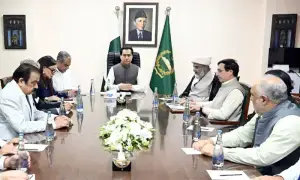
Briefing the Senate Committee on Privatisation and Statistics about the recent population census, Bajwa said that the Pakistan Bureau of Statistics (PBS) had verified the national identity cards of 20 per cent of the population through National Database and Registration Authority (Nadra), adding that 70 million people in the country do not possess identity cards.
Rejecting the opposition's demands that the PBS should compare its records with that of the army to get a clear picture, Bajwa said that both institutions had similar records, adding that the army had assisted the department in carrying out the census by ensuring that the process was transparent and by providing security.
Bajwa said that the reason there was not much difference in the population of Karachi and Lahore was that the government had declared the entire Lahore district as urban, while two districts in Karachi were still classified as rural.
PPP Senator Aijaz Dhamra had rejected the census results, pointing out that the populations of Karachi and Lahore — the provincial capitals of Sindh and Punjab — had not shown major differences, which was not possible.
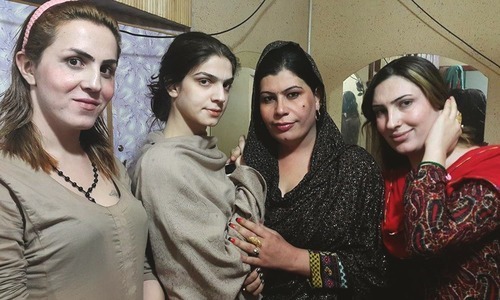
The chief census commissioner also dismissed the objections over the transgender community's census, saying that only those who had declared themselves as transgender were included in the category. "No one was counted as transgender based on their appearance," he told the committee.
Bajwa informed the committee that overseas Pakistanis had not been included in the census.
He said that final census report will be prepared by April 2018. The cost of the census amounted to Rs17billion.
The committee has demanded a post-census survey in 1 per cent out of the 168,943 blocks. The blocks to be surveyed will be determined by provincial governments, it said.
Opposition parties, notably the PPP and MQM, had voiced serious concerns over the preliminary results of the national census, questioning the authenticity of the figures released by the statistics division.
Opposition leader Khursheed Shah had released a statement last week, demanding that the data collected by the Statistics Division and the Pakistan Army be compared to get authentic results.
Shah had also claimed that the government had treated the enumeration exercise as a mere formality, adding that no one was satisfied with the way the census was conducted. However, Bajwa told the Senate committee that the census had been conducted based on the 1998 model.
MQM leader Dr Farooq Sattar had also rejected the results and termed them as "rigged". He alleged that the population figure for Karachi had been marked down as "it cannot be less than 30 million".
According to census results, 20pc of Pakistan's population lives in 10 cities. Karachi is the most populous city in Pakistan housing 14.9 million people, which shows a 57pc increase in the population since 1998.
Lahore holds the second position with 11.13m people, showing an alarming increase of 75pc increase in its population and is followed by Faisalabad, Rawalpindi, Peshawar and Hyderabad, among others.
On average, the population in the country’s 10 largest cities has grown by 71 per cent over the past 19 years, and currently stands at 41 million, as compared to the 24 million who lived there in 1998.