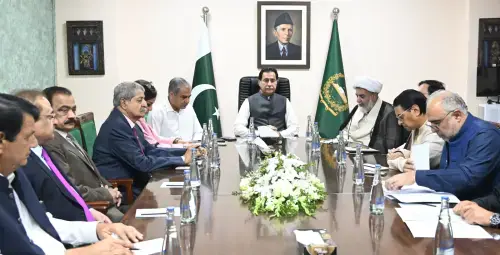
KARACHI: The Justice Project Pakistan (JPP) in collaboration with the Centre of Excellence in Journalism, Institute of Business Administration organised here a live streaming session of Pakistan’s International Covenant on Civil and Political Rights (ICCPR) review by the United Nations Human Rights committee in Geneva on Tuesday.
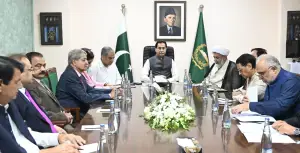
Minister of Human Rights Kamran Michael presented Pakistan’s initial report which stated that funds had been set aside for the welfare of the people and all four provinces of the country had human rights committees in the form of the National Commission for Human Rights (NCHR) and were also looking into any government official found guilty of committing any human rights violation.
In addition, there are human rights cells in courts and a free and vibrant media and civil society spreading awareness regarding such violations.
The delegation from Pakistan also spoke about laws passed to safeguard women’s rights and for the protection of minorities. There were also more seats for minorities now in parliament and the Senate. Plus, he said that Pakistan had job quotas for minorities and the government had ordered security at their places of worship. He also said that the country cared for children’s rights and the rights of transgender people. There were also laws to ensure action against hate speech along with several judicial reforms introduced along with training of law enforcement agencies.
Later, members of the UN Human Rights Committee put some tough questions to the Pakistan delegation; the first one being why no member of the NCHR was among the Pakistan delegation to Geneva. They said that as an additional problem the human rights committees the Pakistan delegation were speaking of came under the ministry of human rights now.
They also questioned the legal framework of requests for asylum in context with the Afghan refugee issue.
They wanted to know about cases of violence against women and convictions, honour killings, women’s health, the death penalty and executions, enforced disappearances, extrajudicial killings and legal representation for migrant workers.
Later, Sarah Belal, executive director for JPP said that the committee had asked Pakistan some tough questions about its implementation of the ICCPR. “If Pakistan wants to retain its standing in the international community, it will have to provide satisfactory answers,” she said.
“It is a process that will take time, but the government must understand that there is an urgent need for reform and that it is civil society’s role to engage with them and advise them on the best course of action. The road ahead is long and there is much to be done,” she said, adding that she was looking forward to Pakistan’s detailed response to the questions.
Published in Dawn, July 12th, 2017