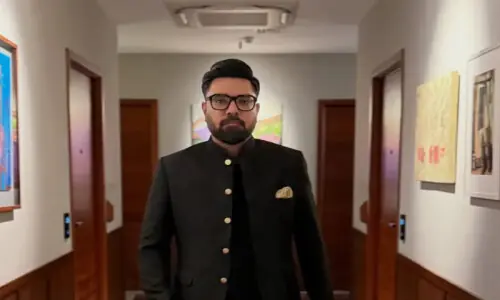
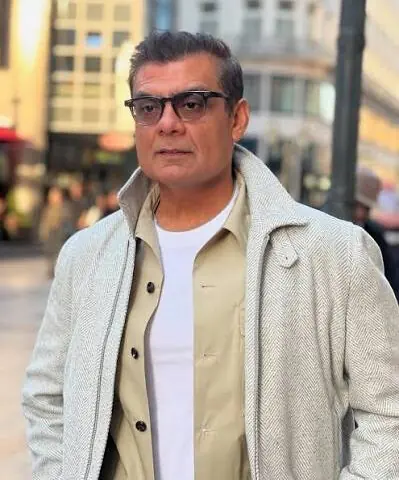
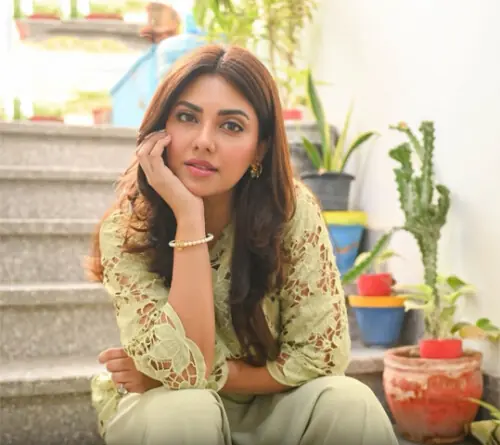
It’s comedians who are the kings of social media in Pakistan. Zaid Ali T (5,467,085 followers) a Pakistani-Canadian is so popular he was asked to host the 2016 Lux Style Awards. Shaam Idrees (5,749,967 followers) is another Pakistani-Canadian with a massive following back home. Ali Gul Pir’s Wadera Ka Beta, which went viral right before the YouTube ban was implemented, has over 4.7 million views. Back home we have local favourites — Junaid Akram (371,963), Faiza Saleem (201,993) and Danish Ali who had 994,875 followers on his Facebook page at the time of writing this.
At the moment in Pakistan, the only ones truly getting anywhere by taking advantage of social media as a platform, are our comedians. “People like to laugh,” says stand-up comedian and online star Danish Ali. “They like to share with others what makes them laugh.”
“The video that catapulted me into fame was Super Chitter I think,” says Danish Ali. “That was back in 2011-2012. The transition to online was very gradual. I haven’t stopped doing stand-up comedy. We still do shows. But the digital medium … it’s definitely empowering.
“It is definitely new for people,” he says referring to corporates who are just waking up to the online medium. “It’s new for all of the brands. Just wait till you see all of the faces in the meetings.
“This year, I’ve noticed everyone is on Facebook,” says Danish. “It’s becoming a whole other thing and I believe it will soon take over television entirely.” Online streaming platform Netflix launched in Pakistan in 2016. They host some Pakistani dramas and documentaries as well. Earlier this year, another platform, iFlix which claims to host far more Pakistani content also launched in the country as well.
In Pakistan, people have used social media for fame, and occasionally they have succeeded, sometimes with devastating consequences as in the case of the late Qandeel Baloch. But they haven’t always been able to monetize their popularity. That might change soon.
“The number of views on YouTube in this past year have gone up exponentially,” says Danish Ali of the response to his videos. That’s surprising considering that Facebook is the main medium via which artists nowadays promote their content. In a previous conversation, Ahmer Naqvi of the online music platform Patari had said, “[YouTube] got banned for five years and consumer behaviour changed. Pakistan is one of the few places in the world where Facebook is the premier video platform.” And Facebook doesn’t pay for your content. In fact, the artist ends up paying Facebook to promote it.
But things are changing. “They [Facebook] have already started [paying people] abroad,” says Danish. Over here, people are slowly shifting back to the once-popular (in Pakistan) video streaming platform and the platform itself has been expanding its operations in the country. Danish thinks that people will shift their focus from Facebook videos to YouTube videos — give or take a year. “YouTube has monetized and partnered with every major content creator in Pakistan,” says Danish. “I know that because they got in touch with me to ask about some of the others [out there]. Although they started to monetize us two-three months ago, it’s a start. It is possible to make an income from YouTube eventually — maybe even in less than a year.”
Currently, however, the main focus remains on getting sponsorships. “That’s what I do,” says Danish. “That’s a huge part of what I do. We’re very cheeky. It’s come to a point where there is not a video that goes unnoticed that involves a brand. We enjoy it. We’re not afraid of being commercial. We’re very cheeky and confident.” Judging by the response, people know its sponsored content and they still love it. Mostly because Danish doesn’t make it seem like he’s actively ‘selling’ them a product.
This, in return for almost no major monetary investment. “I have a DSLR I bought in 2011,” says Danish. “I use the same camera. There are also a bunch of lights that refuse to die. I might start making videos using my mobile phone.”
In other parts of the world, people have been so successful using their social media platforms that they’ve ended up being listed in Forbes — namely the 28-year-old Indian-Canadian YouTube star Lilly Singh. Can a Pakistani star hope to get that far? Danish thinks it’s possible, but we’re not there yet. “We’re basically the number of years behind when YouTube got blocked,” says Danish. “Give it some time. Even in one year you’ll see a difference. This is an exciting new horizon.”
Published in Dawn, ICON, July 9th, 2017