0
0


With the cost of electricity going through the roof, more and more people are turning to Lahori Room Coolers as a cheaper alternative to air conditioners for the summer.
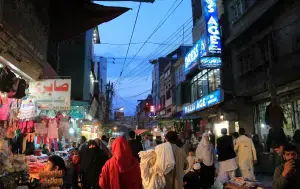
Increased sales of these coolers have also increased production. The coolers are made locally and are available for Rs4,000 to Rs10,000. Workshops where these coolers are manufactured and sold can be spotted from Fawara Chowk to Kashmiri Bazaar to Ratta Amral.
The key components of the cooler are an iron box, a fan, a water pump and khus, a raw wood material. Mats made of khus are soaked with water, and the air that passes through the wet padding cools down and therefore brings down the temperature in the room where the cooler is placed.
Despite its simplistic machinery, building a cooler is a lengthy process that requires more than four workers. Most local workshops use traditional methods to build coolers.

First, iron sheets are cut into portions for a box with three open sides. In the open sides, sheets of khus – made mostly from the wood of the poplar tree – are fixed. The box is then handed over to workers tasked with making khus mats and screens, after which an electrician affixs the fan and water pump to keep the mats and screen wet.
Malik Abdul Rehman, who owns a workshop in Ratta Amral, told Dawn room coolers are popular because they are not very expensive and because they conserve electricity – they consume around as much electricity as two ceiling fans.
Mr Rehman said the workshop also manufactures coolers that run on solar energy. “The price is comparatively high, but it saves electricity charges as you can run the room cooler on solar power in the afternoon,” he said.
He said most of the workers at the shop are government officials working part-time as the work is not difficult; they spend three to four hours a day making khus mats and screens, as well as shaping iron sheets into boxes for the cooler.

“Grass used to be used in the room cooler screen, but that has been replaced with wood raw material, mostly from the wood of the poplar tree,” he said.
He said the coolers were named Lahori Room Coolers because these coolers were first made in Lahore, from where they spread to other towns and cities.
Mr Rehman said his workshop also supplies shopkeepers in other parts of the city and in nearby towns with coolers.

Syed Rizwan, a shopper at Kashmiri Bazaar, said air conditioners are costly and consume more electricity, while coolers are more affordable for the middle class. He said buying coolers from workshops was preferable, as most people used substandard iron sheets that begin to rust from the water in the machine.
Mohammad Sohail, however, said the noise of the fan and water pump was a problem. “Manufacturers of desi room coolers should solve this issue,” he said.
Published in Dawn, April 30th, 2017