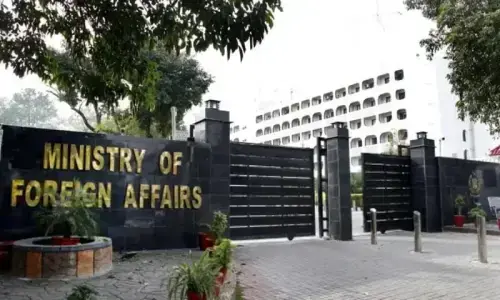
ISLAMABAD: In a belated move, the Ministry of Water and Power on Wednesday accused Sindh authorities of electricity theft and non-payment of bills of Dargah Sehwan Sharif which resulted in a security lapse and the tragic incident of Feb 16.
In a statement issued here, the ministry said that it had been exercising restraint since the last month’s blast at the shrine but it was necessary to put the record straight.
It said the Hyderabad Electric Supply Company (Hesco) working under the power ministry had provided a dedicated line to Dargah Sehwan Sharif for the past many years. The premises, however, ran into default worth millions of rupees after the Dargah administration misused the electricity facility by providing illegal connections to neighbouring shops and hotels.
Also read: Fake power bills issued to shrine, says Sindh’s Auqaf department
Without disclosing the amount of default, the ministry said the government of Sindh had refused to pay overdue amounts since 2011. “After the high amounts accumulated and on detection of massive thefts being allowed on the dedicated line, disconnection was carried out in 2015,” it added.
Power ministry says Dargah’s administration owes power utility millions of rupees
The connection was later restored at the request of the provincial government. The Dargah administration, in order to avoid payment of bills, shifted their load from the dedicated feeder to other feeders, by putting “kundas” on those feeders. Even then, the Hesco administration did not take any legal action in view of the respect for the Dargah premises.
The loadshedding was, nevertheless, routinely being carried out like other parts of the country on those feeders at 6pm every day and the day of the incident was no exception, the ministry said.
It said loadshedding had been a countrywide phenomenon since 2007, but it came down from 12-15 hours a day in 2013 to a considerably low level nowadays. To fill these electricity supply gaps, “the security vulnerable places are covered by the concerned authorities through provision of UPS systems and standby generators”.
However, it was “unbelievable that an important premises like the shrine of Sufi Saint Lal Shahbaz Qalandar, earning millions of rupees every day from devotees’ contributions would be devoid of this basic facility at the security gates, where a UPS could have been provided with an expense of few thousand rupees”, the ministry said.
Examine: The sinned files: Corruption in Sindh
The ministry went on to explain that even if there was no loadshedding schedule, such security contingencies were required to be provided by the authorities concerned to meet any unforeseen disruption of power.
The power ministry said it expected of the provincial authorities concerned to fulfil their responsibilities by providing security contingencies at sensitive installations and “would not try to hide behind lame excuses for their failures”.
Published in Dawn, March 2nd, 2017