0
0
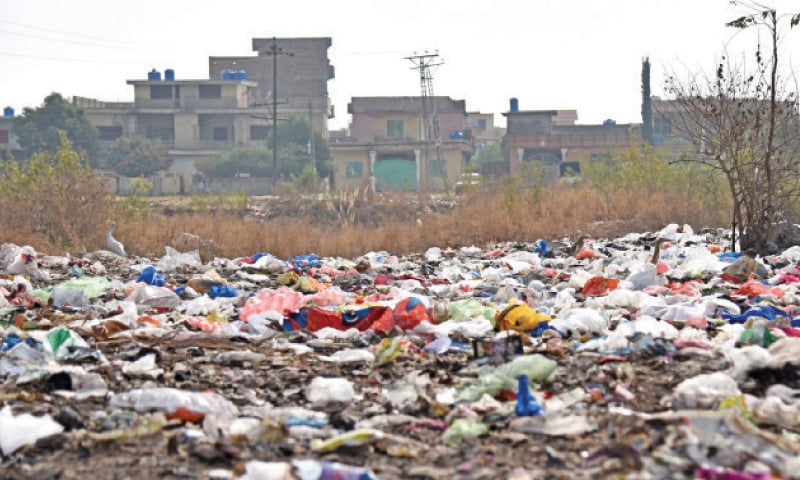
Mayor Metropolitan Corporation Islamabad (MCI) Sheikh Ansar Aziz plans to outsource garbage collection in all sectors and rural areas, but practically he could not take any step for want of cash.
In Rawalpindi, citizens are enjoying proper sanitation and garbage collection system as the district government had outsourced the task to a private company a couple of years ago.
Talking to Dawn, Khaliq Hussain of Satellite Town, Rawalpindi expressed his satisfaction over the garbage collection in his area.
“Earlier, the city used to give a look of dumping ground because there was no proper system to dispose of solid waste, but ever since the private company took over the charge of garbage collection, it keeps streets and roads neat and clean,” he said.
The lack of solid waste management in the federal capital’s rural areas means residents of 32 union councils are forced to dispose of their garbage along the sides of major roads and in open areas.
The local government has failed to address this issue.
While in 18 Union Councils comprising the urban area, there is a well-established collection system run by CDA’s Directorate of Sanitation. However, there is no proper landfill site in the capital to dispose of the garbage and currently the solid waste is being dumped in ditches in the residential sector of I-12.
In rural areas, the people are forced to throw solid waste in open spaces, which causes health and environmental problems apart from being an eyesore.
The Directorate of Sanitation, which is responsible for sweeping, collecting and transporting garbage in Islamabad’s urban areas, has been devolved to MCI and is now responsible for the urban as well as rural areas of Islamabad.
A couple of months ago, Mayor Sheikh Ansar Aziz had announced that garbage collection would be expanded to all 50 Union Councils.
So far, however, it remains a promise.
“Who cares about these areas? We have to throw the garbage in the open,” says Sobia Bibi, a resident of UC Kot Hatiyal, who was throwing garbage and waste at a site near a local girls’ high school.
The local residents burn the garbage every few days.
Chairman UC Kot Hatiyal Malik Ishtiaq, who belongs to ruling PML-N, admitted that there is no system in place in his UC for garbage dumping.
“We will hire a private company as did the chairman of the neighboring UC of Bhara Kahu as soon as we get funds from the MCI,” he said.
According to Sardar Zimri, director sanitation of the MCI, his teams collect around 700 tons of garbage every day, which is dumped in sector I-12.
He said that recently, sanitation directorate placed some containers at Bhara Kahu, Tramli, Khana, Shah Allah Dita and some other areas.
“We are trying our best to cater to the rural population as well, but for starting a full-fledged operation there, we need around 3,000 workers, funding and resources,” he said and added that his teams regularly collect the waste and garbage from the containers placed in rural areas.
He said talks were underway with various companies.
The 56-year-old capital does not have a single landfill site, where natural compost dumping could be carried out for proper disposal of garbage in line with modern scientific techniques.
The CDA began dumping around 700 metric tons of solid waste at existing site in I-12, in 2011 ‘temporarily’, but five years later, the CDA and now the MCI have not done anything to select a proper place for setting up a landfill site.
Dr Mohammad Irfan Khan, an environmentalist, who teaches at International Islamic University, Islamabad, said that the federal capital was in dire need of an integrated solid waste management system and a landfill site.
“Garbage disposed openly can pollute air and water,” he said adding that at the 1-12 dumping site, “The soil is also being polluted as well as the ground water.”
On the other hand, Managing director Rawalpindi Waste Management Company Irfan Ahmed Qureshi said before outsourcing garbage collection, 40pc garbage used to be left uncollected, which would create problems for the residents. “Now, our contractor lifts 100pc garbage form urban areas of the district,” he said.
Published in Dawn, January 9th, 2017