14
14
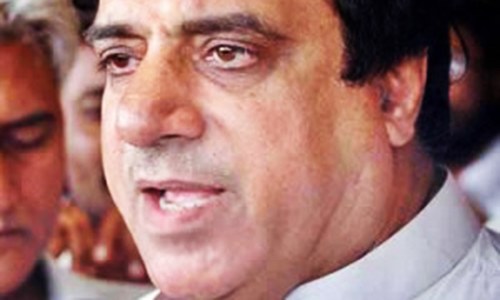
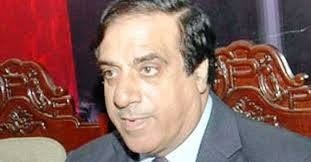
Pakistan Peoples Party leader Jahangir Badar, who passed away in the early hours of Monday morning, was among the founders of what is popularly known as the jiyala culture. He was the original jiyala.
Badar got involved in politics while at university in the late 1960s. As a candidate of progressive forces, he was elected the president of the student union at Hailey College in 1968, but lost the Punjab University’s student union elections against the Jamaat-i-Islami’s student wing in 1970.
Along with his student group, Badar joined the PPP soon after it was founded in 1967. Over the next few years he would internalise the philosophy, “Bhuttoism”, and remained loyal to the Bhutto family and the party, undaunted by incarceration and even flogging during General Ziaul Haq’s regime. He would proudly recall the few days he had spent with Zulfikar Ali Bhutto in Kot Lakhpat prison.
Several years later, when Badar’s son fought for a provincial assembly seat from the Kot Lakhpat area, people of the area had no difficulty guessing who the young man had been named after: Zulfikar Ali Badar — shortened to ZAB.
The PPP leader’s struggle took a turn with the “judicial murder” of the PPP chairman in April 1979. He was detained several times when the party launched its struggle against the military dictator on the platform of the Movement for Restoration of Democracy (MRD) in 1983. The detentions were once again repeated when General Pervez Musharraf came to power and attempted to crush dissenting voices.
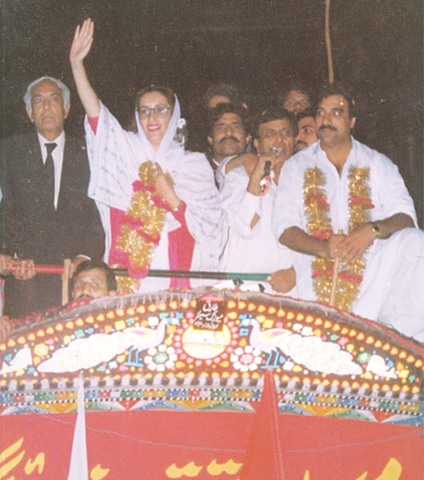
When Benazir Bhutto arrived in Lahore in 1986, to a historical reception by the masses marking the end of her exile, Badar was president of the party’s Punjab chapter. As a mark of how trustworthy he was, Badar was designated the driver of the vehicle that took Ms Bhutto on her expedition around Punjab.
A model jiyala who expressed his thoughts heavy with emotion, he spoke about the party’s ideals and served on several positions in the party and in the government during Ms Bhutto’s two stints as prime minister. He was the central general secretary of the party for several years and worked as the federal minister for petroleum and later science and technology.
He was elected a member of the National Assembly in 1988 from a constituency that included the Walled City of Lahore. He lost that seat to Punjab Chief Minister Shahbaz Sharif in the next election and couldn’t quite find a constituency safe to do politics in the expanding metropolis that was increasingly siding with the Pakistan Muslim League-Nawaz. He represented the PPP in the Senate for two terms, in 1994-2000 and 2009-2015.
Badar lived up to his image of a lower-middle class boy from the inner city who had made it big by staying true to his calling.
One of his favourite pastimes was to invite friends over for a ‘desi’ breakfast and regale them with anecdotes from his political career often featuring his leader, Benazir Bhutto.
At a time when the winds blew in favour of the avid Lahori kite-flyers, he famously invited Benazir Bhutto to a basant festival in Lahore during her first time as prime minister.
Despite his political engagements and imprisonment, Badar managed to attain masters in commerce, political science, and graduated in law. He later earned a doctorate for his work on his correspondence with Ms Bhutto during her exile.
The site of Badar’s funeral prayers — the Punjab University’s new campus — was selected in accordance with his will. “He had wished that if he could not be buried in the institution which had conferred the PhD on him then at least his funeral prayers should be offered there,” said Mani Pehalwan, a diehard party worker who had served alongside Badar for many years.
Published in Dawn, November 15th, 2016