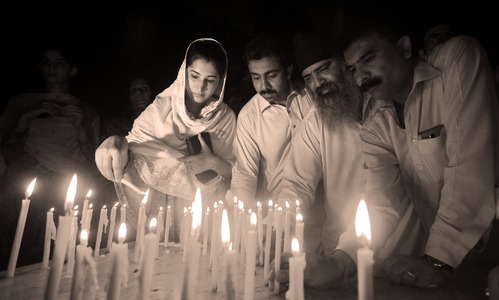
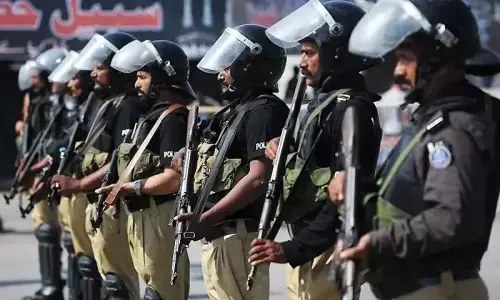
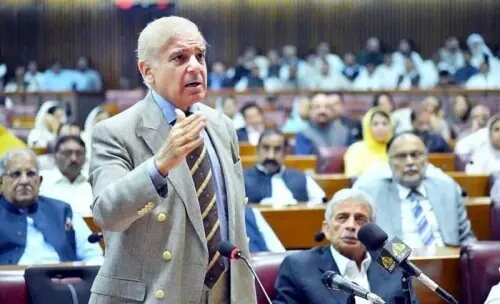
QUETTA: Chief Justice of Pakistan Justice Anwar Zaheer Jamali on Tuesday termed the incompetence of institutions providing security to Civil Hospital Quetta responsible for a suicide attack in August that killed at least 70 people, most of them lawyers.
Read more: Bloodstained coats: how a hospital horror unfolded in Quetta
A three-member bench of the Supreme Court conducted a hearing today into a suo moto case registered regarding the Quetta carnage at the Balochistan High Court.
Chief Secretary Saifullah Chattha, the Inspector General Police (IGP) Balochistan Ahsan Mehboob and Medical Superintendent Civil Hospital Abdul Rehman Miankhel submitted separate inquiry reports into the attack.
The Investigation Officer (IO) informed the court that so far the statements of 36 out of 82 people injured in the attack had been recorded.
During the proceedings, the IGP requested the court to allow him to give an in-camera briefing to the apex court regarding the suicide attack to which the court agreed.
Apex court judge Justice Amir Hani Muslim during the hearing observed that a medical superintendent of Civil Hospital who failed to cooperate in the inquiry was still at his post.
The apex court expressed displeasure over the performance of law enforcement agencies and hospital administration for failing to avert the catastrophe.
Justice Muslim, remarking on the information provided by the IO said, "The IGP and IO do not know about the incident... Who can be trusted?"
Justice Muslim also asked Chief Secretary Chattha why a trauma centre without a single piece of equipment had been inaugurated. The hospital's trauma centre has been closed for over two years.
Senior lawyer Advocate Hamid Khan speaking to journalists after court proceedings termed all reports a 'pack of lies' and alleged that law enforcers failed to protect innocent citizens.
He announced that legal fraternity would, however, cooperate with the apex court and provide video reports and other evidence to the court.
Senior lawyer Ahmed Ali Kurd during proceedings observed that there had been no outcome as yet to the suo motu notice taken by the judiciary. He urged the apex court to ensure the proceedings were result-oriented.
CJP Justice Anwar Zaheer Jamali remarked that if the government fails to implement any verdict of the court then the judiciary cannot be held responsible. He cited the examples of the Karachi law and order situation and NRO cases in this regard.
The case was adjourned until September 6.