60
60
WASHINGTON: Two recent diplomatic disasters — the US refusal to subsidise an F-16 deal and the Obama administration’s campaign to induct India into the Nuclear Suppliers Group (NSG) — have forced Pakistan to look for a paid lobbyist in the US capital.
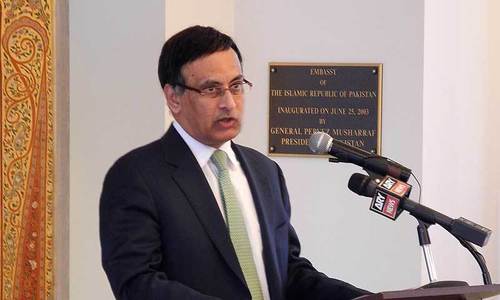
Pakistan Embassy spokesman Nadeem Hotiana confirmed to Dawn that the country was now looking for a lobbyist “but has not yet taken any decision”.
US Justice Department record shows that the last law firm to lobby for Pakistan in Washington was Locke Lord Strategies. Pakistan failed to renew its contract with the firm in July 2013, about a month after the PML-N replaced PPP in the government in Islamabad.
The embassy was paying $75,000 per month to this group, which is the lobbying arm of the law firm Locke Lord.
Examine: Who is to blame for slipping Pak-US ties?
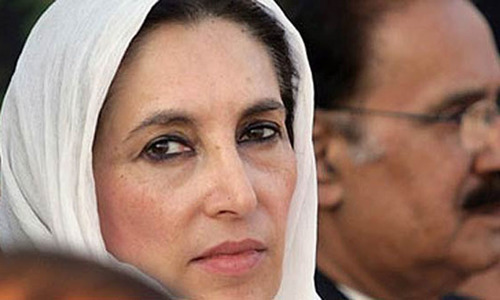
PPP hired Locke Lord mainly because one of its partners, Mark Siegel, was a personal friend of the late prime minister Benazir Bhutto. But embassy officials, even during the PPP rule, often felt that the firm was doing little to promote Pakistan’s interests in Washington.
Pakistan’s main expectation from the firm was to promote its interests on Capitol Hill, where it often has to face angry lawmakers every time an issue related to the country is discussed. But the firm had little influence on the Hill.
It proved equally ineffective in lobbying the US media for Pakistan. There were occasions when the embassy’s press section managed to gather more senior journalists than did the firm for official briefings and for group or individual meetings with visiting Pakistani leaders.
To be fair to Locke Lord, some of the issues it had to deal with during this period (2008-13) were beyond its control.
Even the most influential lobbyists would have found it impossible to plead Pakistan’s case on the Hill, in the media or in Washington’s power corridors after Osama bin Laden’s discovery in Abbottabad.
Yet, there were other issues on which the firm could do better but it did not. This bitter experience — and financial problems — forced Pakistan to let its contract with Locke Lord expire. Instead of hiring a new lobbyist, the PML-N government decided to use Pakistani diplomats for the job.
End to Afghan crisis
For the first year and a half, Pakistani diplomats did a decent job but then relations between the two countries began to deteriorate. The Obama administration, which was close to completing its final term, wanted some arrangement in Kabul that would allow it to say that it successfully ended America’s longest, and the costliest, foreign war.
US officials and lawmakers — often encouraged by Islamabad’s claims — believed that the Pakistanis had enough influence to get them the closure they wanted.
By the time Pakistani officials started publicly acknowledging that they can try but cannot force the Taliban to join the reconciliation process, it was already too late. The general perception in Washington, particularly on the Hill, was that Pakistan was not sincere to the United States.
The Americans believed that Pakistan feared India’s increasing influence in Afghanistan and that’s why it was not severing its ties with the so-called good Taliban, particularly the Haqqani network.
There was little Pakistani diplomats could do to remove such doubts and suspicions. Only the change that the Americans were demanding could have salvaged the F-16 deal. But diplomats could do little to make it happen.
Read: PPP's ex-envoy to US, Indian lobbies working against F-16 deal: defence minister
Even more difficult was to convince Washington not to push for inducting India into the NSG, as this policy was linked to America’s own interests: countering the growing Chinese influence in Asia and the desire to sell US nuclear technology to New Delhi.
Diplomatic observers in Washington say that in these circumstances, even the best lobbyist could only try to improve Pakistan’s image, particularly on the Hill, but cannot promise to deliver.
“So Pakistan must think carefully before hiring a new lobbyist, as it costs money and a lot of it,” said one observer.
Besides the monthly payment, the lobbyists also charge hefty amounts for their lobbying efforts. Locke Lord earned about $4.5 million while representing the country, according to the US Justice Department records, and takes credit for the passage of the $7.5 billion KLB aid package to Pakistan in 2009.
Besides Mr Siegel, Pakistan’s lobby team at one point included Harriet Miers, a former White House counsel under President George W. Bush.
Several top firms have lobbied for the Pakistani government over the years.
Cassidy & Associates represented Pakistan for a time, but opted out in 2007 after then president Pervez Musharraf declared a state of emergency in the country.
Lobbyists say that it is not only the strains in US-Pakistan relations that make it difficult to lobby for Pakistan. They argue that major power players in Pakistan — the civilian government, the military and the intelligence — are all to be satisfied which is a tough job.
Published in Dawn, June 27th, 2016