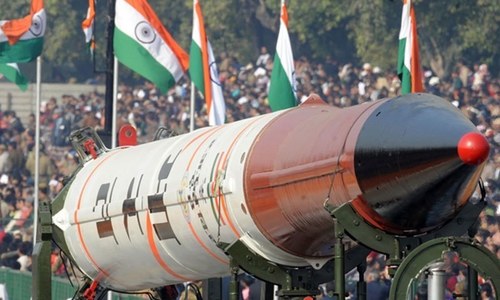
Continued development of Pakistan and India's nuclear weapons programme could endanger strategic stability between both countries, a Congressional Research Service report (CRS) titled "Pakistan's Nuclear Weapons" has said.
Pakistan's expansion of its nuclear arsenal, the development of new types of nuclear warheads and the adoption of the 'full spectrum deterrence' doctrine have caused observers to "express concern about an increased risk of nuclear conflict between Pakistan and India, which also continues to expand its nuclear arsenal", it said.
The report estimates Pakistan's nuclear arsenal may consist of "approximately 110-130" warheads, but said it is possible the size of the arsenal is larger then estimated.
Although United States (US) and Pakistani officials are confident in controls on Pakistan's nuclear weapons, "continued instability in the country could impact these safeguards", the CRS report said.
A number of steps have been taken to "increase international confidence" in Pakistan's nuclear arsenal as well as improve nuclear security and prevent further proliferation of nuclear-related technologies and materials after 2004 revelations about a procurement network run by Abdul Qadeer Khan, it said.
Read more: Indian nuclear security measures weaker than Pakistan's: report
In addition, "strengthened export control laws, improved personnel security and international nuclear security cooperation programmes have improved Pakistan's nuclear security", but "instability in Pakistan has called the extent and durability of these reforms into question".
The report comes amid talks of the possibility that Pakistan and India may be allowed to join the Nuclear Suppliers Group (NSG), a 48-nation club dedicated to curbing nuclear arms proliferation by controlling the export and re-transfer of materials that could foster nuclear weapons development.
The group's membership has signed the Nuclear Non-proliferation Treaty but India has refused to do so, which means "it has not accepted legally binding commitments to pursue disarmament negotiations, halt the production of fissile material for nuclear weapons and not test nuclear weapons".
Earlier this year, a report examining nuclear security worldwide suggested India's "nuclear security measures may be weaker than those of Pakistan", but went onto say that the risk "appears to be moderate", while claiming that the risk of nuclear theft in Pakistan "appears to be high".
Pakistan has expressed concerns over Indian membership of the NSG, cautioning the cartel that country-specific exemptions may negatively impact strategic stability in South Asia.
US President Barack Obama has announced that his country is backing India’s bid to join the NSG, and India is in talks with 23 countries over the issue and hopes to become a member of the group by the end of 2016.
Indian Foreign Secretary S Jaishankar made an 'unannounced' visit to China, which earlier led the opposition to a push by the US for India's NSG membership, to garner Beijing's support for entry into the group.