It is a widely affirmed notion that sports and politics must not be mixed.
However, when it comes to India and Pakistan, it's hard to pry away one from the other. It is usually all or nothing. Culture, traditions, politics, economics, science and history all come with the package.
In fact, it is the relations of the two neighbors that determine their cricketing itinerary, like in the case of the upcoming World Twenty20 group match.
The highly-anticipated World T20 contest became a pawn of internal Indian politics as Siddharth Monga rightly put it.
To fan anti-Pakistan sentiments and score some points for the Indian National Congress party, the Chief Minister of Himachal Pradesh, Virbhadra Singh, refused to grant security to Shahid Afridi's team in Dharamsala, where the World T20 match was originally scheduled to take place.
The match was eventually shifted to Kolkata, and Singh has since claimed 'he never refused to provide security to Pakistan'.
The clouds of uncertainty over the fixture settled when India publically assured Pakistan of 'foolproof' security for the match at Eden Gardens on March 19.
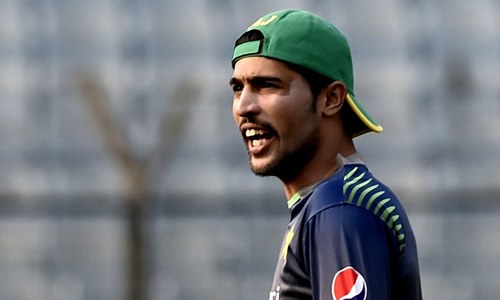
The threats to the Pakistan team from right-wing activists, Singh's remarks, and Rohit Sharma’s harebrained statement about Amir promise an encounter which would put the nastiest of pre-Ashes fixtures in the shade.
But if cricket fans think the developments of the past few weeks have been interesting, imagine what it would have been like in 1999, when the Asian-giants took on each other in Manchester at the 1999 World Cup. The contest led to three arrests, nine ejections, and one burnt Indian flag in the crowd: something extraordinary for the cricket audience.
Pakistan and India met in the Super Sixes of the World Cup with their armies engaged in a conflict in Kargil in the disputed-Kashmir region. This was probably first time that the two countries played against each other on a sports field when they were engaged in conflict.
With their armies exchanging gunfire amid the towering peaks, India opted to bat first.
Wasim Akram ensured Mohammad Azharuddin's side were not off to a flier and Pakistan dominated the early passage of play.
Sachin Tendulkar was firm as always, and scored an invaluable 45 runs. Rahul Dravid and Azharuddin – made crucial contributions in the middle-order as both crossed the 50-runs mark and set Pakistan a target of 228.
People in India and Pakistan switched between the footage of the conflict on the television and the match in Manchester; it couldn't have been tenser.
In reply, Saeed Anwar was the only bright spot of the Pakistan innings as Shahid Afridi, Ijaz Ahmed, and Saleem Malik fell in quick succession leaving the side in tatters.
Pakistan's batsmen were as confused in the shot-selection as the nation was over what was happening in Kargil.
Pakistan were wrapped up for just 180 with 27 balls to spare and India completed their third consecutive World Cup win over Pakistan, all under the same captain.
The irony of Pakistan and India fighting a war in Kashmir when their cricket teams battled it out in England was a little bit too much. Many in India and Pakistan believe Kashmir was a parting gift by English over which Pakistan and India would fight for generations.
Despite the charge up environment, though, the cricket contest was not strangled and 1999 served as another example that sport and politics can in fact be separated.