0
0

KARACHI: Pakistan has seen a massive increase in the scale of illegal wildlife trade over the past few years, which can be gauged from the fact that the country reported seizures of 5,717 turtles last year alone.
The situation is the result of multiple factors that include ineffective implementation of legislation and low penalties, inadequate inter-agency coordination and cooperation, serious funding constraints and capacity gaps provincial wildlife departments have been facing for a long time.
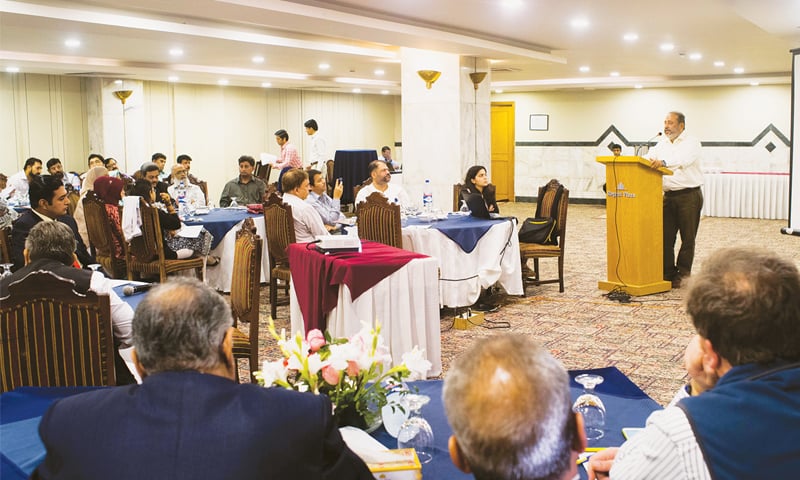
These were some important observations made during the inaugural session of a four-day consultative and capacity building workshop which opened at a local hotel on Tuesday.
Part of a USAID-funded project being implemented by the World Wide Fund for Nature-Pakistan, the workshop is the last of a series of such events conducted in different cities to seek recommendations from relevant stakeholders to develop a national level strategy to combat wildlife crimes in the country.
Welcoming the guests, senior director-biodiversity at the WWF-P Rab Nawaz said the illegal wildlife trade had been recognised as an organised crime last year by the United Nations, which believed that illegal wildlife trade should have the same enforcement tools, techniques and penalties as other illegal practices.
“It is the fourth most lucrative illegal trade falling closely behind drugs, counterfeiting and human trafficking and generates an estimated $19 billion annually,” he told the audience.
An assessment of 102 web portals and social network platforms and individual Facebook pages, he pointed out, had showed that an online wildlife market existed in Pakistan and the scale of e-crime was on the rise.
He also shared the data based on the reported cases relating to illegal turtle and falcon trade according to which 41 falcons were seized in Hyderabad and Karachi while 5,717 turtles were confiscated last year in Lahore and Karachi. The latter were valued about Rs143 million (per their international market price).
Highlighting some key feature of the 11-month project titled Combating Illegal Wildlife Trade by Establishing a National Monitoring Network that Benefits Local Communities and Environment, he said the organisation planned to bring all relevant stakeholders on board to formulate a national level action plan to control illegal wildlife trade in the country.
Neglected flora
It was said during the programme that although wildlife trade involved both flora and fauna and the country had huge asset of medicinal plants, the government seemed to lack a mechanism to protect indigenous plants.
Taking up this issue, director general of Directorate of Research and Training (Customs) Ghulam Ahmad, the chief guest, said herbal species were missing out (in the subject of illegal trade) and it’s time that native flora, as an essential part of ecosystems and national heritage, was accorded due importance and protected.
He acknowledged that enhanced capacity of Pakistan customs officials and other departments on various aspects of illegal wildlife trade would be an important step to ensure improved surveillance of wildlife traffickers.
Conservator of wildlife at the ministry of climate change Umeed Khalid gave an overview of the Convention on the International Trade in Endangered Species regulation, its implementation at the national level and various aspects of the Pakistan Trade Control Act of Wild Flora and Fauna 2012.
Replying to a question, he said rules and regulations under the new act were yet to be made.
“It’s vital that law enforcement agencies take help from new technologies as wildlife traffickers are adopting new strategies to transport wildlife,” he said.
“Given the massive scale of wildlife crimes, departmental and regional collaboration is gaining more importance.”
Regarding hunting of houbara bustard, concerns were raised over the role of the federal government and it was pointed out that provincial wildlife staff had no access to check activities of ‘foreign guests’, who were issued hunting permits by the federal government and it was important that the ministry of climate change took up this matter to combat illegal hunting.
Balochistan forest and wildlife conservator Sharifuddin Baloch highlighted efforts of his department in combating illegal wildlife trade and said public awareness and community involvement were important in addressing the challenge.
Chief conservator of Sindh Saeed Akhtar Baloch, assistant secretary wildlife at ministry of climate change Samar Hussain Khan and head of the wildlife department’s marine turtle conservation unit Adnan Hamid Khan also spoke.
Published in Dawn, February 24th, 2016