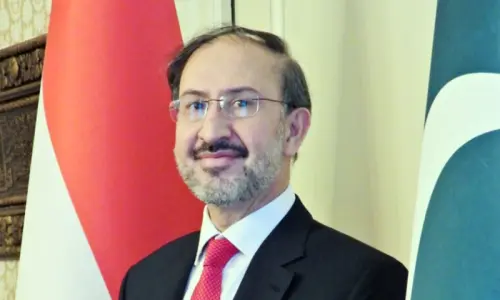
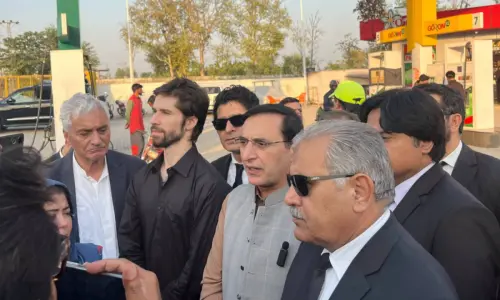
ISLAMABAD: The military adviser to the chief executive officer of Afghanistan was among a 10-member delegation, which included parliamentarians and civil society activists, that arrived in Islamabad to attend the Track 1.5/II Dialogue.
Centre of Research and Security Studies (CRSS) head Imtiaz Gul told Dawn that the schedule for the dialogue had been altered slightly, and that the delegates will now be meeting with Pakistani parliamentarians on Monday, while the inaugural ceremony will be held Tuesday (Jan 12).
“This is the fourth of seven meetings between the civil society and security experts. When we first started the meetings, there was tension between the two countries and the goal was to reduce that tension. The next meeting will be held in Kabul by the end of this month,” he said.
CRSS launched the initiative, titled ‘Beyond Boundaries: Pakistan-Afghanistan Track 1.5/II’, in collaboration with its Afghan counterpart DURAN Research and Analysis (DRA) and the Foundation for Integrated Development Action (FIDA).
The dialogue includes consultations between two working groups. The first is the Regional Security Group and the second is the Civil Society and Youth Group. Both groups consist of eight members from each country and aim to facilitate and promote people-to-people contact.
The fourth meeting in the series, which is the second meeting between regional security experts from both countries, will take place on Jan 12 and 13 in Islamabad and has assumed unusual significance because of the high profile formation of the groups on both sides.
The arrival of the Afghan Regional Security delegation marks the continuity of dialogue between stakeholders from both counties against a backdrop of a politically challenging environment.
Track 1.5/II is also important because the relationship between the countries has been marred by mutual mistrust.
An unstable Afghanistan-Pakistan relationship is fundamentally detrimental to peace and development in the region. Initiatives like ‘Beyond Boundaries’ will bring together influential government and non-governmental stakeholders who can help reduce tensions, address misconceptions, and revive some level of confidence.
More importantly, they will urge both governments and key stakeholders away from the prior attitude of confrontation and antagonism, and towards collaboration for peace, security and regional cooperation.
The working groups on Regional Security and Civil Society and Youth will address varied themes that are relevant to the peace process between Pakistan and Afghanistan.
The key objectives of the initiative are to promote peace and friendship, and improve support for a better Afghanistan-Pakistan relationship through dialogue between influential stakeholders and by informing policymakers through consensus recommendations.
Published in Dawn, January 11th, 2016