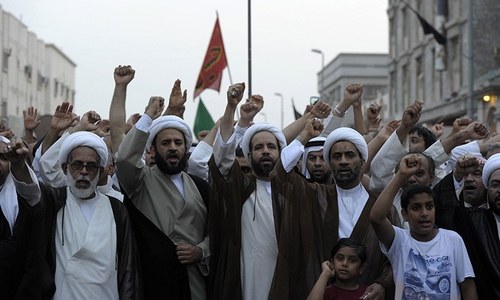
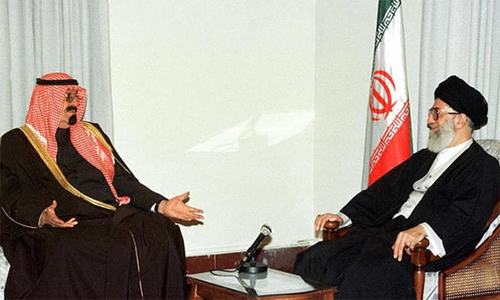
WASHINGTON: The conflict between Saudi Arabia and Iran is likely to further widen an existing sectarian divide in the Middle East, pitting Muslims against Muslims, warns a US survey released on Thursday.
The survey by the Washington-based Pew Research Centre shows that in Jordan, a predominantly Sunni country, 78 per cent of the public have a favourable view of Saudi Arabia, compared with only 8 per cent who have a positive opinion of Iran.
In the Palestinian territories, where again Sunnis predominate, about half — 51pc — have a favourable view of Saudi Arabia.
Here, there is a split by location. Among Palestinians living in the Gaza Strip, 60pc have a positive opinion of Saudi Arabia, compared with 46pc among West Bank residents.
Meanwhile, only 34pc in the Palestinian territories express a positive opinion of Iran, with more support coming from the West Bank (40pc) than from Gaza (24pc).
Overall, 48pc in Lebanon have a favourable view of Saudi Arabia versus 41pc who like Iran. However, as is usually the case in Lebanon, opinion is divided among three main religious groups in the country: Christians, Sunni Muslims and Shia Muslims.
An overwhelming number of Sunni Lebanese have a favourable view of Saudi Arabia (82pc), while Iran’s favourability among Sunnis sits at 5pc.
An even greater divide exists among the Lebanese Shia population, with 95pc saying they like Iran, while only 3pc say the same about Saudi Arabia.
Christians in Lebanon tend to have more favourable views of Saudi Arabia (54pc) than Iran (29pc).
In two other Middle Eastern nations surveyed, there is little support for either Saudi Arabia or Iran. In Turkey, around two-in-ten have favourable views of each power.
And in Israel, even fewer like Riyadh (14pc) or Tehran (5pc). In Israel, the Arab population is about as positive toward Saudi Arabia (37pc favourable) as it is Iran (34pc), despite the fact that the Israeli Muslim population is predominantly Sunni.
Jews in Israel, however, have little regard for Saudi Arabia (10pc favourable) or for Iran — for which there is little per cent favourability among Israeli Jews.
Published in Dawn, January 8th, 2016