77
77


The reaction was quick and critical. Soon as news went around that the Jammu and Kashmir High Court had passed an order directing the enforcement of a 153-year-old ban on beef in the Muslim-majority state, people and separatists poured out their anger in the Valley, calling it a breach of their rights.
On Wednesday, while hearing a public interest litigation, a two-member division bench of the high court had directed the police to ensure strict compliance of a law on beef. The litigation, filed by an advocate, Parimoksh Seth, submitted that consumption of beef affects religious sentiments of a section of the society.
“The Director General of Police...is directed to ensure that appropriate directions are issued to all the SSPs/SPs, SHOs of various police districts so that there is no sale of beef anywhere in India-held Kashmir and strict action is taken in accordance with law against those who indulge in it,” the division bench of Justice Dhiraj Singh Thakur and Justice Janak Raj Kotwal observed.
The law the court referred to dates back to the times of the state’s Dogra kings. In 1862, the Dogra maharaja had enacted the Ranbir Penal Code that shares nearly all sections with the Indian Penal Code.
Under Sections 298A and 298B of the Ranbir Penal Code, slaughtering a cow, buffalo or ox is a cognisable and non-bailable offence publishable by 10 years’ imprisonment and a fine. Possessing the meat of these animals is also a crime, attracting a jail term of one year and a fine.
Ban comes before Eid
Reacting to the ban, Hurriyat chairman Syed Ali Geelani called for protests and a day-long strike in the Kashmir Valley on Friday. “The high court’s decision is an interference in the matters of Muslims,” he was quoted as saying. Other separatist groups supported his call for a shutdown.
On social media, Kashmiris posted pictures of beef dishes with comments describing the ban – coming just days ahead of the Eidul Azha – as an attack on their religious freedom. Eidul Azha is marked by Muslims by sacrificing camels, cows, goats or sheep.
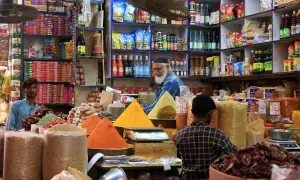
There was outrage on the streets too. Relatively cheaper, beef is a popular alternative for those who cannot afford lamb meat at Indian Rupees 400 a kilo. One of the famous street foods of Kashmir, Seekh Tujj, is made of beef, and this business is likely to be hit by the ban, taking away livelihoods.
“This ban will hit Kashmir’s rural areas badly. Some people earn Rs 400 a day and can’t afford to buy lamb at Rs 400 per kilo, so they eat beef,” said Rayees Rasool, a social activist.
“The ban may not be new, but the religious sensitivities should have been considered. When you hang a person to only satisfy collective conscience, why can’t you heed the conscience of a particular community by respecting its religious values?”
This article was originally published at Scroll.in and has been reproduced here with permission.