1
1
Lost in the hum-drum of everyday life, most of us do not stop to appreciate the people who work to make our lives more comfortable. Indeed, those responsible for many of the basic amenities we take for granted, such as clean streets and fully functional utilities, go virtually unnoticed.
 |
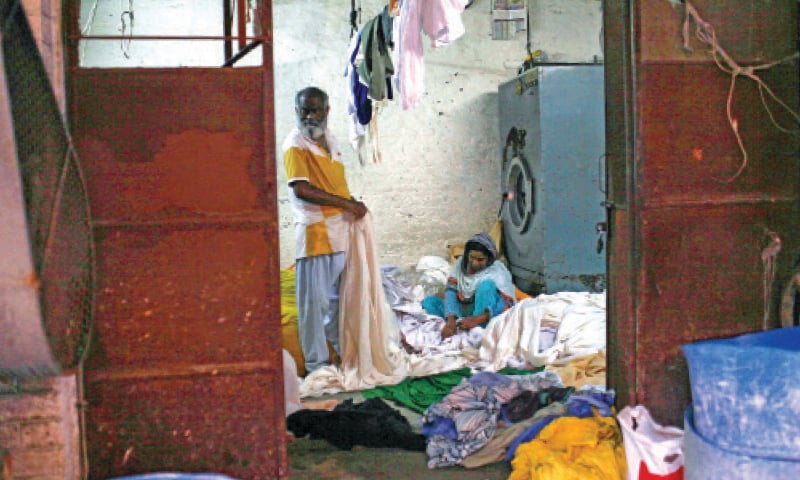
| Rameez, 21, is one of the younger men who work at this dhobi ghat. “I have to operate two machines and work 10 hours a day. I pay rent for this work space, but one day, I want to save up enough money to buy my own laundry shop.” |
Among the professionals who work to keep life clean and freshly-scented for residents of the capital are the laundry workers of the dhobi ghats. When Islamabad was first built and conceived, there were supposed to be designated laundry spaces in each sector, which were supposed to be managed by the Capital Development Authority (CDA). However, as washing machines and automated laundromats became more and more popular, the plans fizzled out.
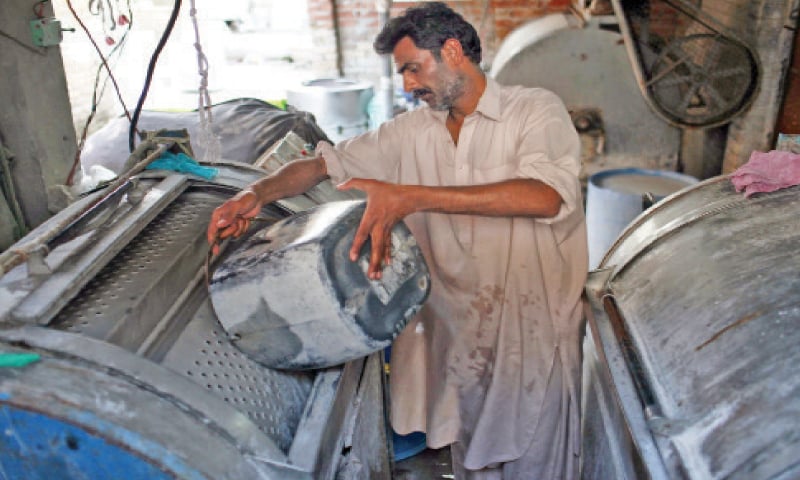 |
| Abdul Majeed, 36, doesn’t have a moment to spare as he pours detergent into a large washing machine. “In this business, it’s always a race against time. Everyone wants their laundry on time, came rain or shine. If it does rain, it just makes our lives harder as the drying area is in an open ground and we have very little space on washing lines to dry clothes.” |
Today, there are two main dhobi ghats in the city, in sectors G-6 and G-7. While the space and the equipment is managed by the CDA, private individuals take care of the washing up, as has been the practice in the past. Only, except for the signature splat of wet cloth meeting concrete, one can hear the distinctive racket of large-scale laundry machines and dryers.
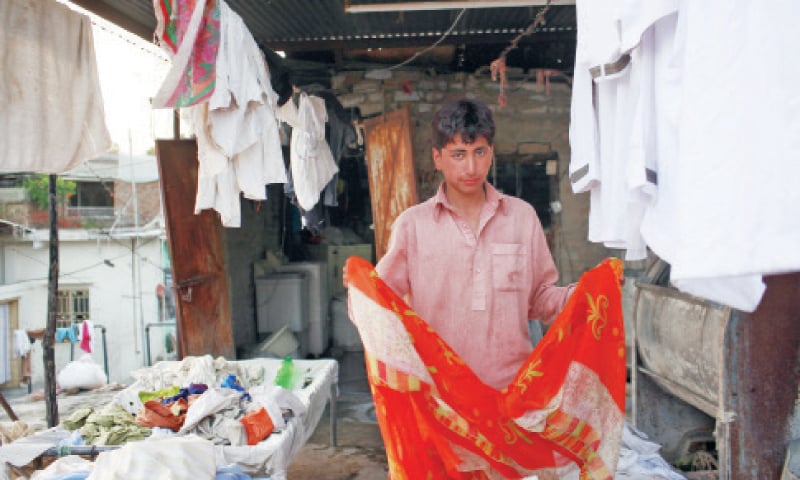 |
| Shabir, 18, is from Muzaffarabad. “I am in town for my summer holidays and wanted to make some money so I joined in with my cousin who also works here. We take turns; sometimes I operate the machine to spin the clothes, other times I hang them out to dry. In these few months, I’ll be able to pay the next tranche of my college fee.” |
Those who work here are mostly carrying on the family business and pay an annual licence fee to the CDA in exchange for using the machines. The days of manually washing clothes may be long gone, but the dhobi tradition is still alive and kicking in the capital.
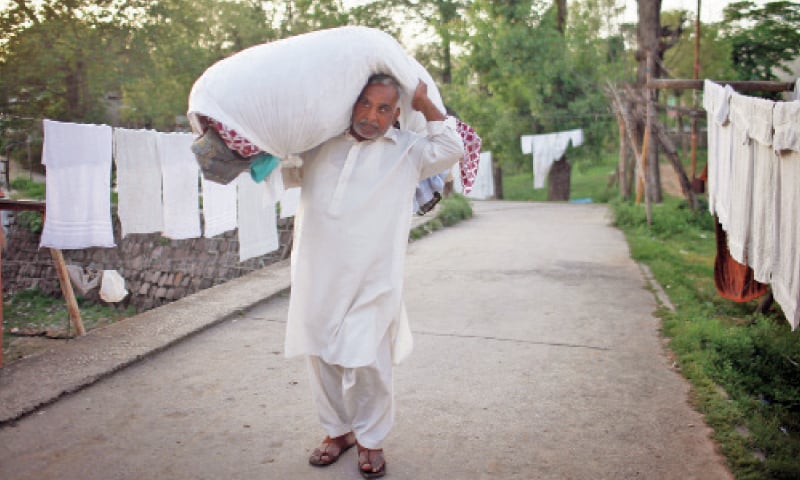 |
| Allah Ditta, 42, has owned a laundry shop in Islamabad for 15 years. “I get dirty laundry from hospitals and residential areas. My workday starts at 5am and I wash and dry clothes before I hand over my washing station to the next laundry man.” He says there is little room to dry the laundry and complains that he is often compelled to work nights to deliver his clients’ washing up on time. — Photos by the writer |
Published in Dawn, May 31st, 2015
On a mobile phone? Get the Dawn Mobile App: Apple Store | Google Play