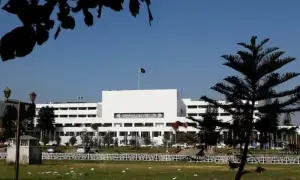
THE passage of the GIDC bill by the National Assembly may have been a display of skilful politics but it was bad economics.
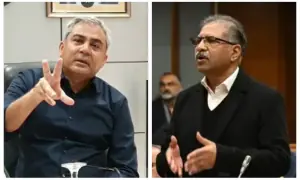
After raising a furore in the Assembly, the ruling party managed to get the backing of the main opposition party to see the bill sail through even as MNAs from the smaller parties were left protesting to little avail.
The passage of the bill was necessary since the fate of the IMF programme hangs upon it. But beyond the compulsions driving the government, it is sad to note that a revenue measure envisioned for the limited purpose of funding new infrastructure in gas transmission and distribution, now appears to be turning into an ordinary revenue head in the budget.
Take a look: NA adopts gas cess bill as PPP backs govt
This is unfortunate because the cess is, quite plainly, a tacit admission of failure to improve the revenue base of the government.
When it was originally introduced back in 2011, the GIDC was supposed to yield Rs30bn in revenue.
We were told that the funds raised through the levy of this cess “shall be utilised for or in connection with infrastructure development” for the two large pipeline projects to import gas from Iran and Turkmenistan, as well as “LNG or other projects or for price equalisation of other imported alternative fuels including LPG”.
The language left a number of doors open to enable utilisation of the funds beyond paying for infrastructure requirements for imported gas.
Today it seems the government will lean on every ambiguity in this language to extract every ounce of revenue they can from this measure. No surprise therefore, that in the last budget the government aimed to collect Rs145bn through the GIDC.
Such a massive increase in reliance on the GIDC for revenue purposes would make sense if we saw huge allocations being made for developing gas infrastructure. But the PSDP for the current fiscal year contains no new gas projects.
Where are all the gas infrastructure projects for which such massive sums of money are supposedly being raised?
The gas sector is riddled with costs that come from inefficient operations, such as high losses, and there is some possibility that the funds raised through the levy of the cess will end up being utilised for underwriting these inefficiencies, under the guise of ‘price equalisation’, rather than genuine infrastructure projects.
It is easy enough to see that the state has a dire revenue requirement, and its creditors are driving a hard bargain, leading the government to squeeze the easiest revenue heads harder and harder to meet its fiscal obligations.
Having obtained passage of the GIDC bill through the Assembly with some political skill, can the government now demonstrate some economic skill as well and show us a budget that proposes to remedy the inelastic nature of our tax system?
Published in Dawn, May 21st, 2015
On a mobile phone? Get the Dawn Mobile App: Apple Store | Google Play