ISLAMABAD: An official disclosed on Thursday that “some people” working with the country’s nuclear programme were sacked to keep it safe.
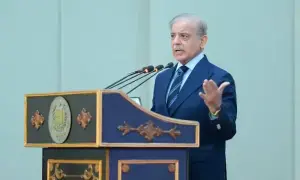
Retired Brig Tahir Raza Naqvi, who works for Strategic Plans Division, the administering body for the nuclear programme, was speaking at a seminar on ‘Future Security Outlook of South Asia: Trends and Challenges’.
The seminar was organised by an Islamabad-based think tank, Centre for International Strategic Studies, and Konrad Adenauer Stiftung of Germany.
The sacked nuclear workers could not clear the Personnel Reliability Programme that was started in mid-2003/04 to screen the employees working on the sensitive programme. All employees of the nuclear programme are periodically checked for family background, education, political affiliation and religious inclinations.
Take a look: US confident of Pakistan's nuclear security
Fears expressed about nuclear safety and security in Pakistan are related to insider threat.
Brig Naqvi would not say how many were sacked over the years or why they failed to clear the screening.
“We filtered out people having negative tendencies that could have affected national security,” Brig Naqvi told Dawn. Those sacked were the “incorrigible” ones, he said, and quickly added: “Our checks are very solid.”
At least 12 people linked to Dr Abdul Qadeer Khan were removed when the proliferation scandal surfaced in 2003. But those firings took place before Personnel Reliability Programme was instituted.
Prof Siegfried Hecker of Stanford University said Pakistan had real security concerns and its perceived need for a robust strategic deterrent was now recognised by the West. However, he added that concerns remained about the increase in fissile material production and development of diverse delivery systems (missiles).
He said Pakistan must keep its nuclear weapons, material and know-how under strict government control.
“Safety and security is paramount to manage nuclear enterprise,” he maintained, adding that safety and security was “not a destination, but a journey … and the first line against nuclear terrorism”.
The seminar also discussed other security challenges facing South Asia, particularly Pakistan.
A former chairman, Joint Chiefs of Staff Committee, retired Gen Ehsanul Haq, in his keynote address gave an overview of global as well as regional security. The Ukraine crisis, conflict in South China Sea, turmoil in the Middle East, heightened Saudi Arabia-Iran rivalry, the self-styled Islamic State threat and growing Islamophobic sentiments, he said, were behind the major changes taking place in Europe, the Middle East and Asia-Pacific.
Published in Dawn, March 19th, 2015
On a mobile phone? Get the Dawn Mobile App: Apple Store | Google Play