SUKKUR: Leaders and representatives of various civil society and non-governmental organisations speaking at a largely attended conference on the plight of womenfolk in feudal society highlighted the issues of Karo-kari (liable to be killed for having an extramarital affair), woman being used as bargaining chip in disputes, domestic violence, illegal Jirgas (parallel judicial system) and certain inhuman customs.
They noted a surge in the incidents involving such customs and called for immediate action on the part of the government to check the trend.
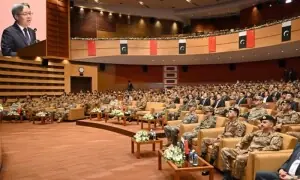
The conference, organised by an NGO in Ghotki on Sunday evening, was attended by a large number of women from different districts of Sindh, besides eminent scholars, intellectuals and opinion leaders.
The speakers included Irfana Mallah, Amar Sindhu, Ghulam Mustafa Baloch, Prof Dr Humera Ashfaq (Islamabad), Qaisar Abbas, Salma Bhatti, Ramzan Burirro, Agha Bilawal Pathan, Saima Gul Mirani, Advocate Robina Chandio and Khair Mohammed Kalwar.
They said that no day passes without witnessing a few men or women killed by their close relatives on the pretext of Karo-kari in Sindh. Only a small number of incidents were reported in the press, they said, pointing out that the media was very selective in covering such things.
They said violence against women and child abuse cases were rampant in rural Sindh but police appeared helpless in a society ruled by influential feudal lords and their family members.
The feudal lords would hold Jirgas to take decisions about the life and death of people although they were neither competent nor authorised to give such verdicts. In some cases murders were declared legitimate and in some others a person was made to pay millions of rupees in fine/compensation for committing a murder or having a love affair, they observed.
Most of the speakers were of the opinion that government should be held responsible for the blatant violation of human rights and for the failure of the law-enforcement agencies in protecting citizens from excesses.
They stressed the need for creating awareness of fundamental, human, women and child rights at the grass-root level and mobilise the political and social quarters for getting the relevant laws effectively implemented.
They resolved to work for the empowerment of womenfolk in order to transform society and intensify the struggle to get the weaker segment of society its constitutional rights.
Published in Dawn, March 17th, 2015
On a mobile phone? Get the Dawn Mobile App: Apple Store | Google Play