4
4

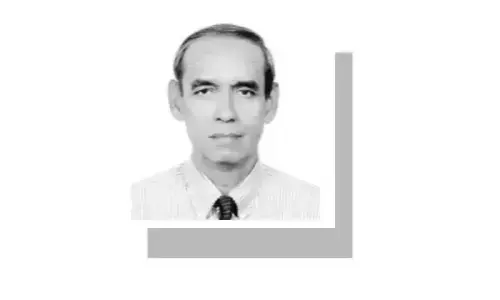
HYDERABAD: Former president Pervez Musharraf knows that the case against him is strong so he avoids appearing in court, according to former senior Supreme Court judge justice Wajihuddin Ahmed.
He stressed that a common man and an influential person must be given justice equally. He was speaking to journalists at a programme titled ‘People’s Tribunal on Land Rights in Sindh’ at a local hotel on Wednesday.
The event was organised by the National Peasants Commission of Pakistan (NPCP) along with the Society for Conservation and Protection of Environment (Scope) and Oxfam and attended by peasant leaders, right activists, lawyers, judges as well as representatives from civil society and media.
Referring to Musharraf’s trial, he said that if a man was involved in many cases which were presented before the court, confusion prevailed and no result was produced.
He said the government and its machinery had examined all possible cases against Musharraf minutely and decided to try the case of Nov 3, 2007 because it was very simple as Gen Musharrf had removed all judges of the Supreme Court and high courts with a single stroke of pen.
He said there was not a single institution which could remove a judge without due process. It was a clear-cut violation of the Constitution.
The former senior judge also expressed concern over Thar situation, saying that criminal ignorance was perpetrated and called for criminal proceedings against those responsible for Thar tragedy.
Speaking about farmers and distribution of land, he said that land should be given to landless farmers.
Later, a panel of seven jurists at the programme unanimously urged the government to accelerate the process of land distribution among the landless, particularly women farmers and tenants, to secure their livelihood and save them from hunger.
The panel concluded that land was one of the most important assets for poor communities.
The jury comprised retired justice Wajihuddin Ahmed as its head while Pakistan Bar Council member and former Sindh advocate general Yousaf Laghari, senior advocate Rochi Ram, senior freelance journalist and land rights activist Ms Najama Saddique and environmental law attorney Qazi Ali Athar as members of the tribunal.
The distinguished panel of judges heard cases of land-related community issues. After a full day of hearing and proceedings, the tribunal took the unanimous decision to admit all the cases and recommended that cases to be followed by the government in order to protect land rights of the people.
Jami Chandio of Center for Peace and Civil Society (CPCS) moderated the proceedings.