0
0

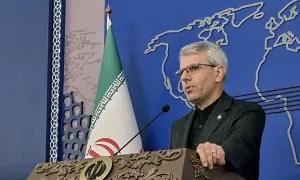
At a seminar organised by Institute of Peace and Diplomacy last week, the main speakers Rana Akhtar and Bashy Quraishy, both Danish citizens of Pakistani origin, underlined that there are shortcomings in religious tolerance in every country.
They focused in particular on Islam in Europe. Quraishy, Chairman of the European Network Against Racism (ENAR), said that there is a lot of xenophobia, racism and intolerance in Europe.
“Although the Europeans hold high the International Convention on Human Rights, when it comes to Muslims, there is a limit, a glass ceiling,” he claimed, and he blamed much of it on the sensational media.
“If you repeat an opinion a hundred times, even if it is wrong, people start believing it,” he said.
“That is what has happened when the otherwise well-informed and tolerant Europeans develop negative attitudes towards Muslims.”
Rana Akhtar stressed that there are many positive developments in Europe related to migration, he referred in particular to Denmark.
“Many Pakistani-Danes do very well in their new homeland and they are appreciated by all. Without the foreign workers in the 1970s, to the naturalized citizens today, Denmark would not have had the economic growth it has had.”
At the seminar, there was a group of young female students from the International Islamic University, Islamabad (IIUI). They said that they are Muslims but they also have some Christian friends, and they said that religion is never an issue among friends.
Another student, Shahbaz from Kashmir, studying in the National Defence University (NDU) said that there is only one Christian student in his class. “She is a very clever girl,” he said, with a tone of respect in his voice.
“I have one or two Christian Pakistani friends and several Christian foreign friends. Friendship is separate from religion,” he added.
Ali, his classmate from Rawalpindi, agreed. Danyal and Asif, the two other classmates said that they never think of religion as something that divides people, at least not in everyday life. “Yet, there are formal regulations if Christians and Muslims want to get married,” they noted.
“They are not religiously based, but based on culture and tradition. Islam allows marriage with non-Muslims. We respect Jews, Christians and others. Muslims should believe in their holy books, too”, the group of students said.
“I work in an international environment in the United Nations. Religion is never an issue or a problem. But when dealing with our Pakistani and Afghan clients, it may be better if people don’t know what religion I belong to, or for that matter, if I am a strong believer of not,” said Arif, a Christian working in Islamabad.
“We are now mature and have no problem talking about religion. Even if we have a different opinion, that doesn’t interfere with our friendship,” said Gulshan, a Christian student at NUML. “But at prayer time, I would usually not go inside the mosque”, Gulshan said, “although I don’t think many, if any, would object to it, even if they knew I am not a Muslim.”
Several carpet shops in the F-6 and F-7 sectors in Islamabad are owned by Hindu families.
“We are a small community in Islamabad. We don’t even have a temple or school,” Tara, 45, said.
“We send our children to certain government schools, and a few wealthy send their children to private schools, with a majority of Muslim students. On family level, we are together with other Hindus, but in business and everyday life, we mix with everyone. And that is how we like it,” Tara underlined.
“Discrimination on the basis of religion, race or national background is very tricky to evaluate,” said Bashy Quraishy. “I believe there is such discrimination in Europe.
Yet, it is also true that we may often draw too hasty conclusions. We may think that disagreements, or limited social association between groups, are caused by religion or race. In actual fact, it may have more to do with class, social background and cultural factors.”
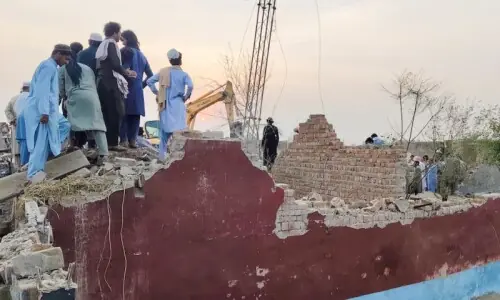
“In Pakistan, I believe that if the Christian community had been more affluent, more middle-class, then opinion-building Muslims would have associated more with them. Conflicts between Christians and Muslims at the lower levels in society (such as the sad case in Joseph
Colony in Lahore last year) may have more to do with the curse of poverty than a blessing of religion.”
“In Europe, too, we must not draw hasty conclusions about lack of integration between the various immigrant groups and the indigenous populations. Cultural differences, different backgrounds and experiences, contribute more to a feeling of being different than another religion alone. Muslims should not always think that religion is the main divider, or that it makes them lesser. Europeans should also see nuances. I think many do, but those who are against immigrants, don’t want to see it,” Bashy said.
“But integration and closer contact don’t just happen. We must make it happen and it takes time, in Pakistan and in Europe”, he added.
“I am very glad for having an opportunity to work for ENAR in Europe. I believe we need to become more proactive in Pakistan as well. We should all talk more about the advantages of inter-culture and inter-faith.”