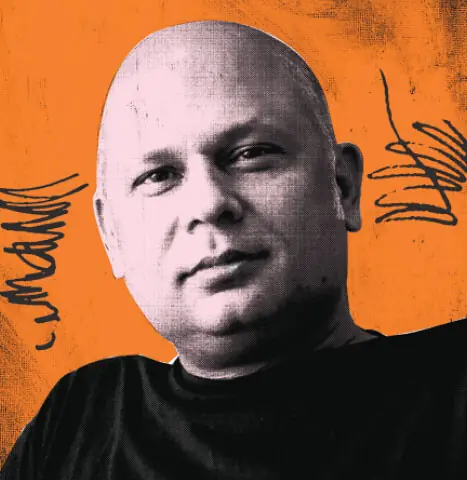
Keynote speaker, historian Rajmohan Gandhi, in his closing session, ‘The Legacy of the Mahatma,’ reminded audiences of Gandhi’s principles of non-violence, peace and forgiveness, highlighting that past hate and bitterness are holding back the way forward for the two countries.
During the festival, Gandhi relied on storytelling as building blocks towards peace between two nations. He used anecdotal evidence gathered through research and his own observations to show similarities between the views shared by Mohammad Ali Jinnah and Gandhi. The warm welcome given to him by the audience could thus be seen as a subtle step towards accepting those building blocks and moving forth, or at least wanting to. Firsthand accounts, especially those relating to Partition — the point of acrimony — are fewer and farther between, but hats off to the KLF for urging and succeeding in a cross-border exchange of ideas. As noted by senior journalist Ghazi Salahuddin, “regional conflicts have always persisted … but I am convinced what we call the paradigm shift will come.”
Through the prism of history, Pakistan’s current myriad problems were also highlighted. With literacy levels at one of the lowest in the world and a population deprived of the most basic necessities, a conflict driven at the expense of a nation’s people seems redundant. The vast military budget is easily an indicator of the state’s priorities. The mentality of a “siege state with a siege mentality” thus has to end as it has shown to have brought the nation nowhere, pointed out Amin Hashwani, president of the Pakistan-India Business Forum, in a session titled ‘Historic Adversaries, Modern Partners.’
During the same session, Dr Tilo Klinner, the German consul general, used the example of the historic French-German enmity and how they became economic partners, leaving them stronger than ever, years later. Highlighting the need of having several factors in place for this to take place, political will and a willing civil society, he cited the way forward to attain political stability.
The need for civil society to take note, especially where the two nations are not availing the opportunities presented to them, was highlighted further by Hashwani. Misconceptions and past bitterness do not give civil society the space to make the right decisions, given that “recollection is so often the cause of our differences,” as Zafar Hilaly said.
An understanding of one’s history naturally gives way to the importance of textbooks and learning. As pointed out by Dr Klinner, a common understanding of history was perpetuated by both Germany and France by using the same textbooks, presenting the same views.
Breeding hate between nations via textbooks and literature would in turn produce only hate and conflict, he noted. A self-perpetuating problem therefore emerges. Where in a nation of low literacy one does not possess the ability to fully comprehend the nuances of a historical analysis, examination of one’s self, also in relation to that narrative, becomes further disjointed and increasingly difficult. Salahuddin deduced that it comes down to learning at the end of the day.
Many universities in Pakistan do not have history departments, leaving students bereft of the capacity of understanding present difficulties and national crises in the historical context. History is a key notion for those trying to find their identity and their place in the world, he argued.
Sharing a common culture, thus, seemed to be at the heart of the festival, as audiences seamlessly resonated with Mr Gandhi as much as with Mohammed Hanif. Culture at some levels is stronger even than religion, according to Salahuddin, and that became the point the festival drove home amongst others.
In fact, the more one studies history, the more one realizes how fluid the past is, noted historian Sarah Ansari in a session titled ‘Flux of History.’ The surge of scholars and diplomats to both nations is a way to reevaluate the way they have viewed their historical narrative, to not only leave room for diverse interpretations, but to also separate it from an endemic layer of bitterness, allowing room for growth, carving out mutual understanding, and hopefully, a way forward.