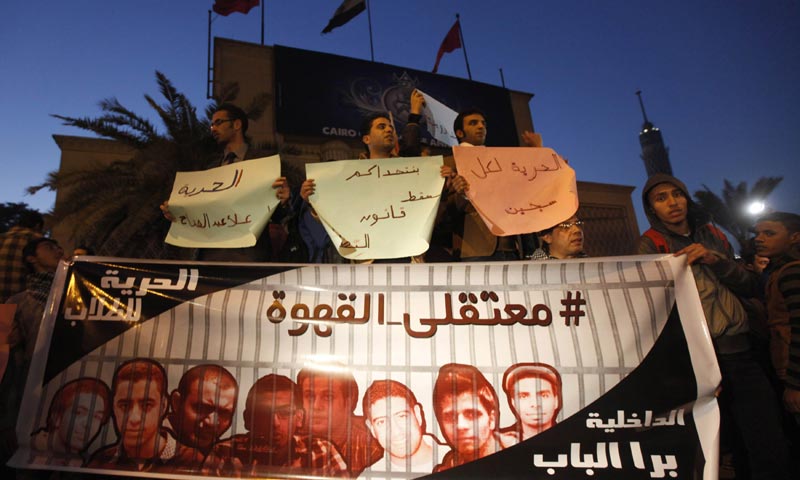


CAIRO: More than 450 Muslim Brotherhood members imprisoned in Egypt launched a hunger strike Monday over their “inhuman treatment” after being jailed following the military's overthrow of president Mohamed Morsi, the group said.
A Twitter account operated by the Brotherhood, which has largely been driven underground by a massive crackdown, said prisoners have been “banned from family visits, legal counselling, medical care and (live in) overcrowded and unhygienic cells.”
Security forces have arrested thousands of Islamists, including virtually the entire top leadership of Morsi's Brotherhood, since he was deposed on July 3.
The 85-year-old political and social movement prevailed in a series of polls following the overthrow of Hosni Mubarak in 2011, and Morsi became the country's first freely elected leader after winning elections last year.
But his turbulent year-long rule was deeply polarising, and the military forced him from power after massive protests in which demonstrators accused him of betraying the 2011 “revolution.”
The Brotherhood said several senior figures were taking part in the strike, including wealthy financier and onetime presidential hopeful Khairat al-Shater, senior official Essam al-Erian, former legislator Mohamed Beltagi and Essam al-Haddad, an advisor to Morsi during his presidency.
It did not say whether Morsi himself or Brotherhood Supreme Guide Mohammed Badie were also doing so.
Earlier this month, Human Rights Watch said Egypt's military-installed authorities had detained five Morsi aides for nearly five months without disclosing their whereabouts, saying it amounted to an “enforced disappearance.”
Three of them, including Haddad, have been recently moved to Tora prison where Badie is held.
Murad Ali, spokesman of the Freedom and Justice Party, the political wing of the Brotherhood, said the movement's members were held in “solitary confinement” in prisons. He is being held in Tora prison.
“Even when we go out of the cells for two hours a day, each prisoner is let out alone. They are isolating us from everything,” Ali said in a statement passed through an intermediary.
Ali also said the authorities were not allowing the movement's members to read newspapers and had confiscated their books and radios.
“The dictators believe that these harsh conditions will make us retreat, but in fact they are making sure that our dream of Egypt becoming a free and democratic state is coming ever closer.”
Ali further said he was “not getting regular access to lawyers,” but added that he had weekly access to his family members.
A crackdown launched by Egypt's interim rulers targeting the Islamist supporters of Morsi have left more than 1,000 people killed in street clashes since he was deposed.