0
0

Automobile industry
APROPOS of Dr Ismail Bana’s letter (May 20), I would like to appreciate his positive outlook about the the auto industry which he considers important for the technological and economic development of the country. However, he has misinterpreted several facts.
The industry is facing many problems and is still is striving to overcome these. With the introduction of mortgage financing of automobiles, the demand for cars rose steeply. It took some time for the industry to understand the trend. However, manufacturers responded to this increase and all major manufacturers have increased their production capacity to a large extent.
The industry has been working on capacity enhancement as a continual project, in different phases. With all capacity enhancements, the industry will be producing 202,000 units by the end of this year and around 500,000 vehicles by the end of 2010.
Likewise, the vendor industry is also making significant investments to increase its production capacity. It has invested more than Rs20 billion. According to data available, by the end of the current fiscal year the vendor industry would have contributed Rs24.81 billion to the GDP, and another Rs8 billion to government revenues.
In addition, the automobile vendor industry alone provides employment to over 150,000 people. The total investment of the industry stands at Rs92 billion, which provides for import substitution of $371 million, thereby saving $195 million in foreign exchange.
This investment and import substitution have provided substantial support to the supply chain of the auto industry. However, in line with the increasing demand, the vendor industry anticipates further investments to keep pace with the production lines of automakers. The industry has plans to increase its investments to Rs171 billion by 2010. According to a report in a section of the press, the margins of auto-manufacturers have dropped by eight per cent. The reasons which have caused this decline are rising steel prices and higher exchange rates. Also, multiple-level taxation is one of the factors raising the cost of production. However, the industry has not passed on the burden of this increase to the final consumer in order to protect the latter’s interest.
I agree with Dr Bana that there are delays in delivery of certain models but those are the ones which are in high demand.
Introducing measures like the recent grant to import vehicles, coupled with the rising input cost of production due to higher steel prices and higher exchange rates of foreign currency, will hamper the of growth and investments in the industry.
ASMA B. AKHLAQ
Karachi
Playing the mediator
REPORTS, appearing in the press and indicating Pakistan’s readiness to mediate between the Palestinian authorities and Israel make strange reading indeed.
For one thing, beset as it is with numerous knotty problems — like unrest in tribal areas and in Balochistan, continued lack of consensus on construction of big dams and sharing of water resources between provinces, free-for-all in-fighting in the ruling party with its leaders constantly working at cross-purposes with each other, the embarrassing absence of ruling party members from parliamentary sessions — one wonders if the government has the capacity to get involved with an issue as knotty and thorny as Palestine.
For another, an important requirement of any mediator is that it has, at the very least, a working relationship with each of the parties between which it seeks to mediate. While, with Yasser Arafat gone, Pakistan has reasonably good relations with Palestinians, it has no relations at all with Israel, and the people harbour a great deal of hostility against that country and for good reason.
What makes our government think that Israel, which has put into the waste-paper basket with unconcealed contempt innumerable UN resolutions, passed with overwhelming majority over the decades, will show the slightest interest in a Pakistani move for mediation between it and the Palestinians?
What or who is then behind this non-starter nonsense? How come all of a sudden, right on cue, so to say, Mr Mahmoud Abbas, the head of the Palestinian administration, was here seeking Pakistan’s help on the Palestine issue? In my humble opinion, it is no more and no less than a ploy, a behind-the-scenes attempt by America to nudge Pakistan a little closer to Israel on the pretext of mediation. In order to mediate between two parties, one needs to be on good terms with both — and therein lies the catch.
WAJID NAEEMUDDIN
Karachi
IBCC and IT revolution
AS a procedural requirement I had to get my academic credentials attested by the Inter Board Chairmen Committee (IBCC) and the HEC. Inspired by the air of IT revolution I searched the website of the IBCC (www.ibcc.edu.pk), went through it and noted down the address and other details of the Islamabad office.
Its website says that one cannot get degrees attested on Tuesday and Wednesday. Perhaps its staff wants to have a midweek rest as well. Also, according to the website, completed applications are received until 12 noon and attested degrees can be collected from 2pm to 3pm the same day.
I went to the IBCC office on May 19 for degree attestations. The first surprise came right about the address. The IBCC was nowhere at the address given. A neighbour told me that the IBCC had shifted to a new place in G-8. I had to trust him because the IBCC had not left its new address at its previous place.
The second surprise came when I reached its new office. I was told that attested degrees would be handed over the next day and not the same day. It rejected the claim of same day attestation posted on its website. I was asked to meet the secretary if I had anything to say about it. I tried to reach the secretary but a chowkidar did not allow me to go in and instead asked me to speak to her on the telephone.
I tried to impress upon the lady that it would disturb my entire schedule if I got the degrees attested the next day, and also if the HEC can attest degrees the same day, why can’t the IBCC? When it is unable to do so in one day, it should not have claimed it will on its website.
The problems caused cannot be undone. However, all I would like to say is: thumbs up to the IBCC and the IT revolution in Pakistan.
MUHAMMAD SHAHZAD
Via email
Desecration and sacrilege
What happened at Guantanamo Bay is really a matter of shame and regret. However, we must accept this reality that a sick mentality has no boundaries.
We can only regret such “deliberately manufactured” incidents and can protest in a civilized way.
We hope that the American administration will fully comply with the wishes of Muslims the world over and will take measures to ensure that such incidents do not take place in the future.
On the other hand, if we look at our own society, we find that due to lack of awareness people tend to pay little or no respect to the holy verses, printed either on the front pages of vernacular newspapers (mostly Urdu) or in the magazine sections, etc. Recycling is a viable solution, but we lag behind in this, too. Our religio-political parties who miss no opportunity to take advantage of incidents like the one that happened in Guantanamo Bay, lack credibility to address this sorry situation in our own societies.
We must take measures to ensure that the sanctity of the holy verses is preserved in our own part of the world.
SOHAIL MUMTAZ
Kasur
Education budget
EDUCATION has remained neglected by successive governments and more than 60 per cent of the population is illiterate. The education sector needs to be treated more seriously. Literacy is crucial for keeping democracy alive. Pakistan is counted among Third World countries with poor literacy rates, and as a result is faced with a myriad problems, such as poverty and lawlessness.
The best the government can do for its people is to a greater share to education. Currently, we are spending less than 25 per cent of our GDP on education, which is the lowest in South Asia.
If the government devotes more of its budget to education, we will be able to set up more industrial and technical institutions. This will solve the problem of unemployment to a great extent. In addition, we will get skilled people within our own country.
Also, the education system needs to be revamped, for there are many inherent defects which need to be rectified.
ASIFA GHULAM RASOOL
Turbat
Auditing of city govts’ accounts
THE Karachi city nazim and his team are spending allocated funds lavishly on various projects. But how the money is spent is not visible except for two or three flyovers and a few roundabouts in selected areas.
The entire old town has been kept neglected. Footpaths have been allowed to be used by commercial banks to install big generators, thereby creating hurdles for pedestrians.
In order to give a correct picture of the expenditure of the city government, an audit team composed of independent chartered accountants should be formed to audit the annual accounts of the city governments on the pattern of the public limited companies, so that the taxpayers come to know whether the taxes paid out of their hard-earned income are utilized for the betterment of civic utilities and what portion is diverted for lining the pockets of finance managers of city district governments.
GHEEWALA A.G.M.
Karachi
‘Prison houses or money minting dens’
THIS refers to the article “Prison houses or money minting dens” by Nafisa Shah, City Nazim, Khairpur (Dawn, May 22). It contains a highly exaggerated account of the situation.
The writer has totally ignored the efforts made by the government and the department to resolve problems of overcrowding in jails. She has ignored the creation of separate jails for women and juveniles, transportation of prisoners to courts, construction of judicial complexes in jail areas, reformative measures through religious and general education, provision of basic amenities — fans, TV, water coolers, etc., and numerous welfare measures undertaken by the department through support of various NGOs/government departments, for example release of convicts after paying a fine of over Rs1.5 million in the last six to seven or so months, and repatriation of prisoners (particularly women and children) by arranging fare expenses.
In the last couple of years, the living capacity for prisoners has been enhanced by 50 to 60 per cent by establishing three new jails at Dadu, Badin and Shikarpur, construction of 15 new barracks in different jails, 160 cells with attached bath/toilet facilities in the Karachi, Hyderabad, Sukkur and Larkana jails for prisoners under the death sentence. Two jails, at Ghotki and Nausheroferoze, are under construction while a jail for 500 prisoners has been approved in ADP 2005-06, to end overcrowding, making provision for future needs as well.
The Central Jail, Khairpur, was provided sui gas facility in 2003-04 and other six jails are being provided gas connections during current year for which work is in progress.
So far as whipping, solitary confinement, chain/bar fetters, etc., are concerned, they were abolished and deleted from the jail manual about 10 years back.
The department has been dealing with over 20,000 inmates in 19 prisons in the province with a large number of officials in different ranks where omissions and commissions or involvement in illegal activities cannot be totally ruled out. But the account presented by the writer is unrealistic. Those found indulging in unlawful or illegal activities on duty are dealt with under the rules. This aspect has also been ignored by the writer.
BRIG (retd) M.A.H. AYAZ MUGHNI
Inspector-General of Prisons, Sindh
Karachi/Hyderabad
Menace of tax evasion, smuggling
THIS is with reference to letter by Dr Faaiz Akbar about tax evasion in the cigarette industry (May 26). This is an alarming situation. The government of Pakistan loses a substantial amount of revenue each year due to illicit practices like tax evasion, smuggling, counterfeiting, etc. The loss incurred by the national exchequer runs into billions.
From Landi Kotal to Karachi’s Tariq Road, smuggled items are easily available. Pakistan is losing more than US$500 million annually in custom duties to smugglers. A huge loss of about Rs7 billion is due to cigarette smuggling alone. One wonders at the nonchalance with which smuggled cigarettes are allowed to enter the porous borders of Pakistan.
If the government is serious about the uplift of economy, it should try to evaluate why goods are being smuggled. And it should make efforts to block all the routes of smuggling to save the economy and the local industry.
RAUF QASIM
Lahore
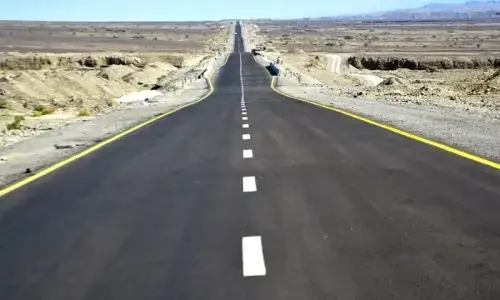
Reconstruction of roads
WE came to know through a news item published in Dawn of April 16 that the city government will spend Rs1.6 billion on the reconstruction of 14 major roads in Karachi.
Regrettably, the city government has completely ignored the major roads of Gulistan-i-Jauhar, which are in a very bad shape, mainly due to overflowing sewerage and leaking water pipelines.
The digging of roads by various utility agencies is another nuisance which damages the roads.
From University Road (Samama Shopping Centre) to Jauhar Square and from Rashid Minhas Road (Jauhar Roundabout) to Kamran Chowrangi, the main roads need immediate recarpeting.
In spite of the orders passed by the Sindh Ombudsman, internal roads of Block 15 in Gulistan-i-Jauhar have not yet been carpeted by the city government.
S. W. A. MAULAI
Karachi
Rise in transport fares
RECENTLY, public transport fares have been raised. Whenever fares are increased, assurances of improvement and better facilities are given, though they never materialize.
The condition of privately-owned transport is pathetic — smoke-emitting, rickety bases with broken seats and window-panes, uneven footboards, etc.
Apart from other aspects, many reports have been published regarding the ill-effects of smoke-emitting vehicles and pressure horns but no action is taken by the official machinery.
I would, therefore, request the higher authorities to introduce a check and balance policy before resorting to escalation in prices and ensure strict compliance of the relevant laws.
ZAKARIA KARIM
Karachi
Barren hills
MR Akhtar Khan’s letter, “Barren hills” (May 16), provides candid comments on our hill environment. In doing so, Mr Khan has tried to draw the attention of the authorities concerned to the cutting down of trees in the hilly areas of Murree, Swat and Azad Kashmir.
These hills, once thickly covered by trees, have now been robbed of their original splendour. Both the farmer ploughing his land and the visitor would like to see the landscape restored to its original glory.
I feel the problem posed by the cutting down of trees should be given top priority by our government. Otherwise, I am afraid, our land is going to turn into a wasteland in the not too distant future. One just wonders as to why there is no check on the commercial activities of timber mafia. Who has given free-play to these woodcutters?
I recommend a practical and down-to-earth approach to the problem. The government may like to give tax and duty exemption for the import of timber and wood into our country, thereby saving our national heritage from further destruction.
Our hills and vales are beautiful. Let us preserve them. Let us take good care of them.
TAYYAB SALEEM
Karachi
PTCL inaction
THE staff of the Taxila exchange seems firmly determined not to pay any heed to my repeated complaints lodged continuously for the past 20 days.
My telephone (No. 0596-543587) installed at my residence in Wah Cantonment went dead on May 1.
I lodged a complaint the next day. No action was taken. I again complained on May 6 and was given complaint No. 1.
Since then I have been regularly reminding the staff concerned for removal of the defect but all my requests have fallen on deaf ears.
CHAUDHRY QURBAN ALI
Wah Cantonment
10 richest men
MR Hafizur Rahman in his “Of Mice & Men” (May 11) has said that it is not known as to how many billions the 10 richest persons of Pakistan have in their foreign accounts.
The fault lies in the government. When ministers were being asked to submit their assets statements, it was not stipulated that they must include their foreign assets, both in cash and kind. This was a ridiculous omission. It mocked the vast majority that does not have a balance even in a local bank.
The remedy is very simple. All VVIPs, both politicians and bureaucrats, must be made to submit “complete” assets statements, and a law in this regard should be passed.
KHURSHID ANWER
Lahore