3
3
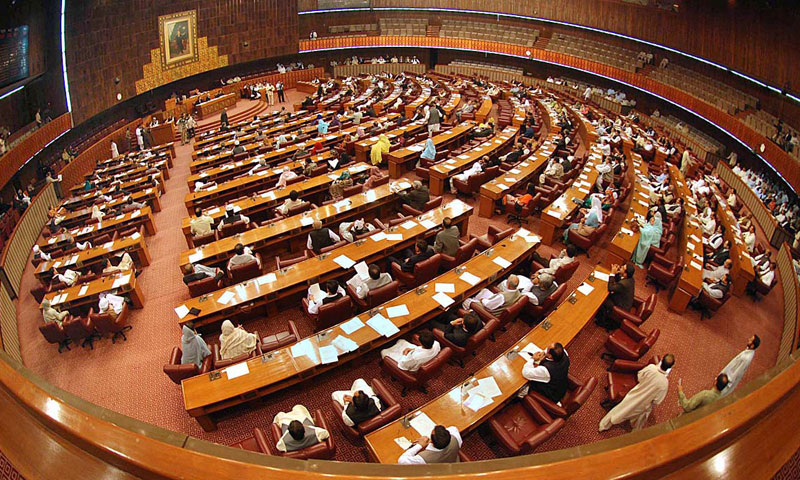

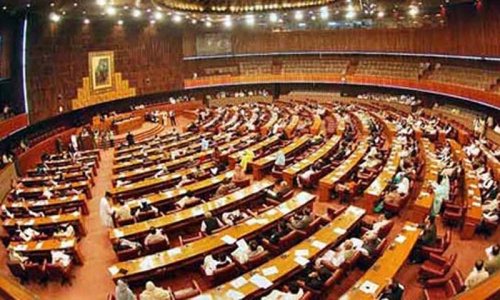
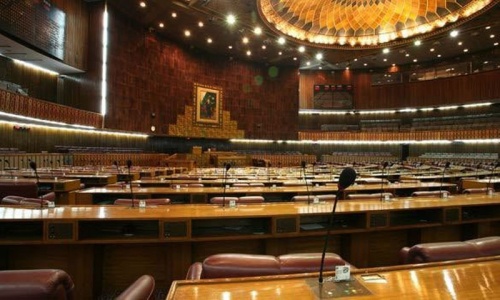
House committees work as powerful arms of parliaments all over the world. With their multi-party character, the committees, called standing committees in Pakistan, act as the eyes and ears of the executive to help it in policy-making and legislation. That each committee does by watching and probing issues of public concern in its designated field and tendering advice to the executive.
They have powers to pursue public petitions against government departments and call officials to explain. A committee dominated by spirited members can really protect and promote common good with such powers.
If adequately utilised, our standing committees can play huge role in improving governance in the country.
But that is, at best, a dream. In this age of specialisation, legislators have to have knowledge and a commitment to the greater common good, not just the partisan interests. That demands a legislator confident enough to hold accountable a government department and its officials.
It will be unfair, indeed unthinkable, to compare our parliamentary committees with the stature and performance of the house committees in the United States.
After all, our parliament is in democratic transition. There is no harm, however, in hoping our lawmakers would seriously try to justify the trust the voters put in them for the common good.
Though the previous two National Assemblies completed their full five-year constitutional terms, their standing committees failed to play their roles.
For example, one can hardly recall or remember if the standing committee on defence of the last National Assembly ever dabbled in national security issues, the bane of people’s daily life.
Or that the standing committee on foreign affairs provided any input in stabilising Pakistan-India or Pakistan-US relations? In fact it may be news to many that veteran ANP leader Asfandyar Wali Khan headed foreign affairs committee and Dr Azra Fazal Pechuho the defence committee.
In their rare meetings, the two committees only discussed mundane matters. The only contribution Dr Pechuho’s committee was the passage of the bill for the controversial Defence Housing Authority, Islamabad.
This raises the question why don’t our legislators take interest in real issues and real committee work? Why the national exchequer must bear the significant financial burden of these committees for nothing? Beside free air travel to and from Islamabad, members of the committees get traveling allowance and daily expenses to attend committee meetings.
The problem, political analysts believe, starts with the nomination of members on the committees and election of their chairpersons. In functional democracies, it is an exhaustive exercise involving selecting the member with the right knowledge to the right committee. Here, members are picked randomly and chairpersons of the committees to accord them prestige as they are provided chauffeur driven official cars and other perks.
Hardly any legislator shows interest in joining a particular committee because it suits his talents. For most of them, the preferences are different.
A government confided to Dawn that the latter follow their business interests. For example, a legislator having business interests in oil industry would want to sit in the standing committee on petroleum and natural resources.
Nominations to the standing committees of the present National Assembly have been announced. On the face of it, some deliberation went into choosing the right people to the new committees.
On the foreign affairs committee appear the names of the former foreign minister Shah Mehmood Qureshi, elected on Pakistan Tehreek-i-Insaf ticket, former National Assembly Speaker Dr Fehmida Mirza of PPP, Ghus Bux Khan Mehar of the PML(F), Mehmood Khan Achakzai of PkMAP, Dr Farooq Sattar of the MQM and Dr Shireen Mazari of the PTI.
They all are experienced in the craft, or have knowledge of it, and make a good team. One hopes they meet regularly and contribute to the country’s foreign policy in a fast changing world.
Ms Mazari, who once headed the Institute of Strategic Studies Islamabad, told Dawn that she wanted to be on the committee.
There are also other grey areas in the working of our parliament. For one, it would be good if Speaker National Assembly Ayaz Sadiq looks into the research department of his secretariat, a place to be educated for the legislators so willing.
Indeed, the new speaker had recognised a particular deficiency in the department in his press briefings after taking the office.
For years, the department had been working with only five research officers when parliaments heavily depend on researchers for better performance. Speaker Sadiq promised to take in more researchers.