0
0
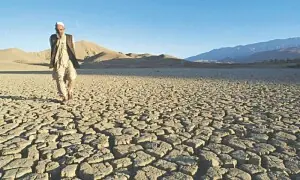
 DADU, June 2: The majority of people of 30 villages of the Kachho area have migrated to other places as the situation in the Khirthar mountains has worsened owing to drought.
Three children died of measles on Sunday and hundreds of children under five years of age are infected with different diseases. Ratio of the death of cattle is increasing because of shortage of fodder and fatal diseases.
Hundreds of people, infected with tuberculosis, cholera, diarrhoea, measles, malaria and other diseases, are waiting for medicines and medical teams as they have no money to purchase medicines.
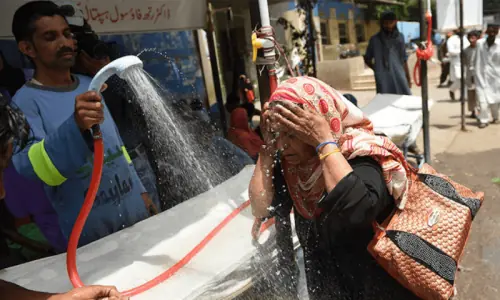
Wells in the villages have also dried up, forcing women to fetch water from places as far as three to eight kilometres away on donkeys or camels.
The government and the district administration have not provided basic facilities to the people and even drought emergency funds have not been not used in these villages.
This correspondent visited the villages and met the people.
In the Keti village, located 60 kilometres off the Johi town, Kachho Bachayo Welfare Organization chairman Wafa Birhamani said about 5,000 families used to live in the village and surrounding areas but a majority of them had migrated.
He said a minor girl, Mariam, daughter of Azeem Birhamani, died of measles and over 100 other children were infected with the disease. He said about 150 children and women were suffering from diarrhoea, tuberculosis, cholera and malaria.
He said around 500 cattlehead had perished in the last month due to non-availability of fodder.
A social worker of the Mohammad Ali Jamali village, Lahno Khan Jamali, said diseases had spread in the area due to consumption of saline water for the last eight years.
He said a minor boy, Manzoor, son of Abu Bakar Jamali, died of measles on Sunday and 50 other children were infected with the disease.
He said 45 per cent population had migrated from the village and 80 per cent livestock had perished due to drought.
A villager, Ghulam Abbas, while narrating the miseries of the drought-hit people said half of the population of Tando Raheem Khan, Jano Jiskani Sohiri, Chiddi and Wali Mohammad villages had migrated to other places in search of water and food.
He said 40 wells had dried up and water of 20 wells had turned brackish in these villages. He said the residents were infected with leishmaniasis, tuberculosis and measles but no medical team had visited the villages and medicines had not been provided to the patients.
In Fateh Brohi, Village Shadabad Organization chairman Akbar Lashari said 50 per cent population had migrated from Nangar Dario, Kando Babar, Mazari, Mazar Bhurgari, Nabo Birhamani, Naseer Mohammad, Karim Rodhnani and Morio Chandio.
He complained that the district administration and the Sindh government had not distributed medicines, food and other relief goods among the people.
When contacted, the official in charge of the World Food Programme, Sindh, Adham Effendi, said relief goods were being distributed among 10,000 drought-affected families in the Dadu district. He said food distribution among the people would be completed by June 15.
He said the people of drought-hit areas depended on relief goods and they would face hardships if the relief operation was stopped. He said the government and donor agencies should pay attention to the miseries of the people.
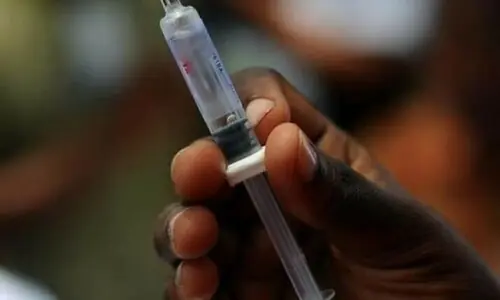
Johi taluka health officer Dr Hashim Thaheem said after receiving reports of measles disease, medical teams visited Keti Wassan and Mohammad Ali Jamali villages and vaccinated 200 children. He said vaccination was also carried out against other disease in some villages of the Kachho area.
INVESTIGATION: A team of army arrived in the district on Sunday and started investigation into non-utilization of a fund of Rs392 million, released under the Drought Emergency Relief Assistance for the Kachho area.
The federal government had released the fund for providing basic facilities in the Kachho area but it was not utilized.
The EDO, works and services, Mohammad Ali Memon, told this correspondent that the team, led by Colonel Shahbaz, would visit schemes proposed under the DERA in the Kachho area.