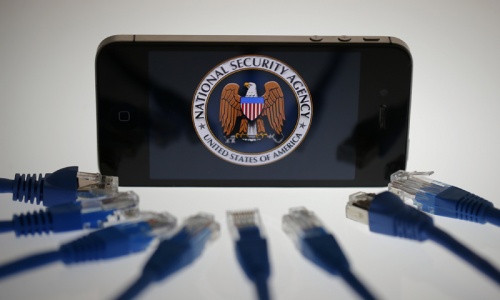
Las Vegas - The head of the US National Security Agency has faced Congress and presidents in the past, and isn't expected to budge from the position that his mission is to stop terrorists and that his agency's surveillance program is critical, even amid a room full of hackers Wednesday at a conference in Las Vegas.
Army General Keith Alexander has been unapologetic during recent public appearances about the NSA collecting "metadata" to, in his words, "connect the dots" and "go after bad guys who ... hide amongst us to kill our people."
"Our job is to stop them without impacting your civil liberties and privacy," Alexander told a July 18 audience at the Aspen Security Forum in Colorado. "We don't want another 9/11."
Alexander has said his agency's ability to dip into what he characterized as a "virtual lockbox" and compare collected email and telephone data helped thwart 54 plots against targets in the United States and some 20 other countries.
He pointed to a failed plot in September 2009 against the New York City subway system that he said could have been the worst terror strike in the US since the Sept. 11, 2001, attacks. Another example he offered was a plot to bomb the New York Stock Exchange.
At Aspen and at a June 28 appearance before the Armed Forces Communications and Electronics Association in Baltimore, Alexander said his agency dipped into the metadata database fewer than 300 times in 2012.
He insists it wouldn't be physically possible and is "flat not true" that the spy agency is listening to people's phone calls and reading their emails.
But the Black Hat conferees that Alexander will face Wednesday are a skeptical and tech-savvy bunch - attuned to news about former NSA systems analyst Edward Snowden leaking classified documents last month and the conviction on Tuesday of US Army Private Bradley Manning on 20 espionage, theft and other charges that could get him life in prison for giving military secrets to WikiLeaks. Manning was acquitted of the more serious charge of aiding the enemy.
"We're hoping he'll be addressing current issues head-on," said Meredith Corley, spokeswoman for the 16th annual Black Hat conference at Caesars Palace. Alexander's keynote speech was expected to draw most of the 7,000 registered attendees, Corley said.
At Aspen, Alexander unveiled measures including a "two-person rule" to thwart leaks like the disclosures by Snowden, a former computer systems administrator in Hawaii now living at a Russian airport while he seeks asylum in several countries. The rule would require two people to be present when key national security information is accessed or moved.
Alexander also talked in Colorado and Baltimore about creating a 4,000-person "Cyber Command" of offensive and defensive teams - both to protect Defense Department systems and launch cyberattacks against enemy networks under White House orders.
"We've got to have this debate with our country," the eight-year NSA chief said in Aspen. "How are we going to protect the nation in cyberspace?"
But, "there is risk in having a debate on a national security issue," he added. "The adversary will learn what we're trying to do."
NSA spokeswoman Vanee Vines in Washington, DC, declined Tuesday to provide advance word about Alexander's speech in Las Vegas. Vines wouldn't say whether a conference that attracts cyberspace explorers could serve as recruiting ground for the NSA.
But the spy agency chief's comments are expected to spur lively discussion among government workers, corporate systems analysts and freelance hackers both at the Black Hat events, and at DefCon, a somewhat more counter-culture conference that opens later this week, also in Las Vegas.