PESHAWAR, July 26: Chamber of Education, a network of private educational institutions in Khyber Pakhtunkhwa, on Friday called for putting in place a better governance system in the education sector and seeking a better role of the private sector in education reforms.
It also regretted that the private sector had no representation in the Education Working Group set up by the provincial government’s Reforms Implementation Cell.
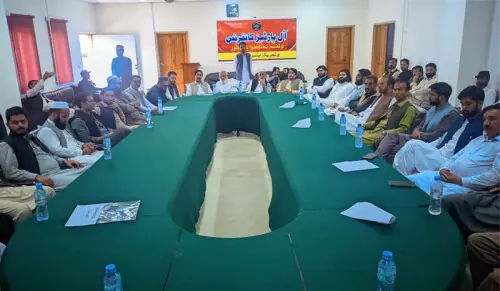
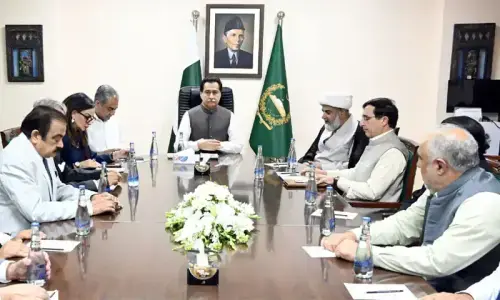
These views were expressed during a post-budget seminar on education at a local hotel, where parliamentarians, educationists and representatives of the civil society were in attendance.
The seminar arranged by CoE with the support of DFID had two sessions one chaired by Speaker of the provincial assembly Asad Qaisar and second by elementary education minister Atif Khan.
According to CoE general secretary Zafarullah Khan, the main purpose of the event was to stimulate expansive and innovative thinking among educationists, opinion leaders, parliamentarians and various stakeholders on bringing about a positive change in the education field.
He appreciated increase in budgetary allocation for education by six times.
Mr Zafarullah said CoE was a registered representative body of around 6,000 educational institutions in Khyber Pakhtunkhwa.
Provincial minister Atif Khan said the education system was in tatters mostly due to political interference, lack of governance and other issues during the previous governments.
He said the government was committed to address all issues and challenges facing education sector.
The minister shed light on various educational initiatives, mostly relied on innovative and technological interventions.
He urged participants to support the government’s reforms agenda, which, he said, was meant to de-politicise education sector and focus on the teachers’ training, monitoring and evaluation.
“All this will help us introduce the acceptable quality standards of education in the province,” he said.
The speaker of the provincial assembly also outlined the PTI government’s priorities in general.
He said after coming to power, the government faced a number of challenges, especially presenting budget in a short time and developing consensus on education.
The speaker urged the people to be a bit patient and said the government would meet their all expectations.
He said the new government wanted a change in status quo.
“One syllabus for all schools will be in place starting from nursery class by March 2014 slowly but surely we shall extend it to other classes as well,” he said.
He said the government would involve the private sector in all policy matters, while services of former Higher Education Commission chairman Professor Attaur Rehman would also be sought on education reforms.
Other guest speakers of the day were Ali Salman, Nauman Ishtiaq and Arshad Nafees.
The presentations were followed by an interactive discussion, which was opened to the house in which valuable suggestions on improving education services were discussed.