6
6
THE Abbottabad Commission report is in many ways a watershed moment. Blunt, to the point and critical in ways that few thought possible for a Commission operating in the shadow of an omniscient security establishment, the report has laid down a marker for serious and sober analysis of the country’s national security troubles. The Commission’s recommendations in particular form a sensible road map to putting Pakistan on an internally and externally more secure footing, and as such should be read with great interest by the powers-that-be. First and foremost, the essen-tial recommendation that comes across is the need for intelligence coordination between the various military- and civilian-run agencies. The present situation of shambolic ad hoc cooperation is too well known to bear repeating. The mistrust is deep and the turf wars intense, and the predominant intelligence agency, the ISI, is simply unwilling to accede to civilian control or work with the civilian side of the state as a genuine partner. This must change, though it is far from clear how exactly to proceed.
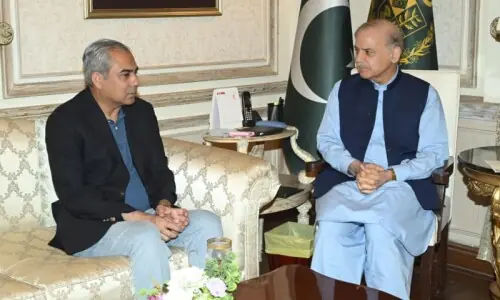
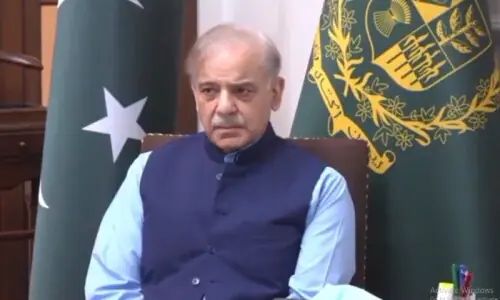
Perhaps a sensible starting point would be strong civilian leadership. The PML-N government appears willing to try and knock heads together where necessary and cajole when required, which is a necessary but not sufficient condition. Beyond that what is required is a meaningful strategy. What, for example, can the government do when a strong and assertive interior ministry is the starting point for a coherent intelligence coordination strategy but the previous ISI chief contemptuously dismisses the possibility of subservience to the interior ministry, as retired Gen Pasha did in his testimony to the Abbottabad Commission? The answer appears to lie in the true principals, the prime minister, the army chief and the DG ISI, sitting down and rethinking the de facto chain of command. Civilian supremacy is not just a theory, it is a necessity.
The second step at the outset is for parliament to begin to take on a greater role in intelligence oversight. With a second consecutive credibly and acceptably elected parliament in place, the long process of establishing parliamentary oversight is already overdue. Parliament is greater than the sum of the government and as such has more collective weight to bring to the table. Parliamentary committees on intelligence would necessarily comprise a cross-section of political parties and would lay the ground for expressing the collective will of the electorate. Again, however, the road that has to be walked is before us; will the people’s representatives develop the will to walk down it?